Showing posts with label football. Show all posts

Thursday, May 16, 2024

The Magic of Gaelic Football


Gaelic Football is the most popular of the Gaelic games and is played on a rectangular grass pitch with H-shaped goals at each end. This Irish game is high octane, full of speed, precision, accuracy and intensity. It combines the magic of rugby, football and handball, all in one sport.

It is played with a round ball and both hands and feet are used to control and pass the ball. There are 15 players on each team, with only one referee. The game is played in two 30-minute halves.

The primary objective is to score by driving the ball through or over the goals. If the ball is sent over the bar of the goals, this equates to One Point. If it goes under bar, into the goalmouth, this equates to Three Points. The team with the highest score at the end of the match wins. To learn about the rules of Gaelic football, click on this link.

Friday, May 26, 2023

Spain’s Shame: The Times view on racist abuse of football players


When English football was shamed by the racist abuse of players in the 1980s, the response by both the government and football authorities was robust. The Football Spectators Act of 1989 introduced banning orders of up to ten years for anyone found guilty of using racially threatening, abusive or insulting words. In 1993 the Kick It Out campaign was established by the English game’s governing bodies, including the Premier League and Football Association, to tackle discrimination at a grassroots level and provide a facility for fans to report incidents of abuse. No one would claim that the English game today is perfect — racism abounds on social media — but incidents of racist abuse at matches are now extraordinarily rare, and English football has become a model of diversity and inclusion for the rest of the world.

Compare this record with the shameful scenes in Spain at the weekend when fans chanted insults at a visibly distressed Vinícius Júnior, Real Madrid’s 22-year-old star Brazilian forward, during a match against Valencia. Nor was this the first time Vinícius had been the target of such abuse. The Spanish league has made nine formal complaints for racist abuse against the player over the past two seasons, most of which have gone nowhere. While some fans have been fined and banned from stadiums, so far only one faces a possible trial.

Vinícius has clearly been let down at every level of the Spanish game: by a referee who failed to take the players off the pitch on Sunday in line with international protocols and even ended up sending off Vinícius in the 97th minute after an altercation; by La Liga, which runs the league, and the Spanish football association, which have conspicuously failed to tackled racism in their sport; and by the police and prosecutors who have failed to bring any of the player’s tormentors to justice. Yet when Vinícius wrote on Instagram that “racism is normal in La Liga”, the response by Javier Tebas, La Liga’s president, was to attack the player for not turning up to meetings to discuss the problem.

Nor is Vinícius’s treatment an isolated case in Spanish football. Other black players have been subjected to abuse. That points to a wider problem in the Spanish game. Unlike football authorities in other countries, La Liga does not have the power to hand down punishments to fans on its own, but can only pass racism cases to local prosecutors. La Liga expressed “tremendous frustration” yesterday at the lack of sanction and convictions by the sports disciplinary bodies, public administrations and jurisdictional bodies to which it has reported racist incidents. It says it will request a change in the law to give it more sanctioning powers, including the right to require the partial or complete closure of venues, the ability to ban individual fans and impose financial penalties on clubs.

The government would do well to give La Liga these powers, if that is what it takes to drive racism out of the game. Spain is preparing to bid alongside Portugal and Morocco to host the 2030 World Cup. It is surely unthinkable that Spain could be chosen for the tournament unless and until it takes decisive action to drive racism out of the domestic game. After all, La Liga is second only to the English Premier League as the richest football league in the world. Its matches attract a global audience. What kind of signal does it send to the world if it cannot protect a prodigious young talent such as Vinícius from abuse by fans? Thirty years after Britain, Spain needs to Kick It Out. (The Times, Tuesday May 23, 2023)

Wednesday, May 18, 2022

A Message from Premier League Footballer Jake Daniels


This season has been a fantastic one for me on the pitch. I’ve made my first-team debut, scored 30 goals for the youth team, signed my first professional contract and shared success with my team-mates, going on a great run in the FA Youth Cup and lifting the Lancashire FA Pro-Youth Cup. 

But off the pitch I’ve been hiding the real me and who I really am. I’ve known my whole life that I’m gay, and I now feel that I’m ready to come out and be myself.

It’s a step into the unknown being one of the first footballers in this country to reveal my sexuality, but I’ve been inspired by Josh Cavallo, Matt Morton and athletes from other sports, like Tom Daley, to have the courage and determination to drive change.        

In reaching this point, I’ve had some of the best support and advice from my family, my Club, my agent and Stonewall, who have all been incredibly pro-active in putting my interests and welfare first. I have also confided in my team-mates in the youth team here at Blackpool, and they too have embraced the news and supported my decision to open up and tell people.   

I’ve hated lying my whole life and feeling the need to change to fit in. I want to be a role model myself by doing this.

There are people out there in the same space as me that may not feel comfortable revealing their sexuality. I just want to tell them that you don’t have to change who you are, or how you should be, just to fit in.

You being you, and being happy, is what matters most.

Jake Daniels

Thursday, October 28, 2021

I'm a footballer and I'm gay


Adelaide United player Josh Cavallo has come out as gay, becoming the only current top-flight male professional footballer in the world to do so.

The 21-year-old wrote on social media that he was "ready to speak about something personal that I'm finally comfortable to talk about in my life".

"I'm a footballer and I'm gay," the midfielder said in an accompanying video.

"All I want to do is play football and be treated equally."

Josh said he was tired of trying to perform at his best "and to live this double life, it's exhausting".

"It's been a journey to get to this point in my life, but I couldn't be happier with my decision to come out."

"I have been fighting with my sexuality for six years now, and I'm glad I can put that to rest."

Josh says it got to the point his mental health was affected and he was "going into dark places".

"At the end of the day I just wanted to be happy. This is bigger than football, it's my life. I'd go home and I wasn't happy," he told the BBC's Newshour programme.

Sunday, September 01, 2019

Boca Juniors: The Agony and the Ecstasy

By JAMIE LAFFERTY
n Magazine by Norwegian, December 2018

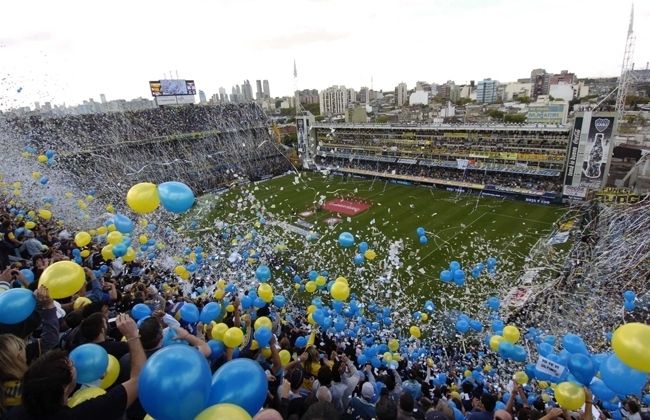
On a cool, clear evening in Buenos Aires, San Martín de San Juan, a small football team from western Argentina, arrives to face the music at La Bombonera. Home of Boca Juniors, the largest and most successful team in the country, the stadium is the beating blue-and-gold heart of the colourful, chaotic La Boca neighbourhood. 

Indeed, it’s known as much for the noisy enthusiasm of its fans as for the skill of its players, who’ve counted Maradona among their number. Officially the Estadio Alberto J Armando, it’s known to everyone as “The Chocolate Box”, thanks to its unusual shape. But in reality, it’s more meat grinder than confectionery container – certainly for visiting teams who enjoy little success here. This is partly owing to a police ban on any travelling supporters, put in place in 2013, that ensures a wholly partisan atmosphere permeates. 

The result is an intimidating frenzy reminiscent of the Two Minutes Hate in George Orwell’s 1984. “An ecstasy of fear and vindictiveness... [flowed] through the whole group like an electric current, turning one even against one’s will into a grimacing, screaming lunatic.” A game at La Bombonera is like that, only 45 times longer.

And yet, strange as it might sound to the nonfootball fan, this fury holds a certain appeal. In a sport where growing corporatisation has led to an increasingly bland and sanitised experience, Boca’s wild terraces are a throwback to a different era. For fans from around the world, this intensity is something to be sought out. Tickets are hard to come by, and it’s not an experience tourists can just wander into, but local tour company Tangol has begun to offer tickets to select foreigners who are accompanied by seasonticket-holding guides. As soon as I heard this was possible, I wanted to experience it. I’m from Glasgow, a city with a notorious footballing reputation of its own, but, even so, visiting La Bombonera seemed like it could be something above and beyond anything I had encountered at home. 

A couple of hours before kick-off, I’m duly picked up by diehard Boca fan and Tangol guide Santiago Puerta. Inside the minibus, there’s an eclectic mix of tourists: two stern-looking Finns, a cheery American family and a lone Iranian backpacker. “You’re coming to my house now – it’s a privilege,” says Puerta to all of us as we board, and he makes sure no one is wearing any red or white clothing (the colours of middle-class rivals River Plate) before reassuring us that we’ll be in a section of the 49,000-seat stadium away from flares and trouble. 

As the minibus moves through the city, it passes buses of hardcore Boca fans who have been touring the city for hours, shouting and singing out of the windows to let everyone know it’s game day. As we get closer to the stadium, Puerta gives us a potted history of the club, which was founded in 1905 by Italian immigrants for La Boca’s vociferous working class. Now the most popular team in the country, their jerseys are found across Argentina, but the reason for their famous colour scheme is surprisingly arbitrary. “The founders couldn’t agree on which colours to have, so because La Boca is close to the port, they decided to go down there and take them from the next ship that came in,” explains Puerta. “It was Swedish, thank God, because these colours are really pretty. This is what we have: blue and gold for life.” 

As we climb high into La Bombonera for the start of the game, those same hues are on the back of every fan and draped from all four stands. The sun is setting so even the sky seems to pay tribute to the team, shifting from a powdery blue to a burnished gold. Puerta settles his guests before taking a seat on the stairs, making it easier for him to jump up and roar when Carlos Tévez gives his team the lead after just nine minutes. The collective roar sounds like an explosion. The atmosphere at La Bombonera is intensified in part because of the steepness and semi-circular shape of the terraces, which boost the acoustics.

From high in the main stand, we have a great view of the pitch, but also of La Doce (The Twelfth Man): the relentless fans behind the goal who move from one chant to the next, with just a quick breather at half time. 

While there’s no doubting the commitment of any fans here – even we newcomers quickly lose our inhibitions when a goal is scored – La Doce sets the rhythm for the stadium, and perhaps the entire country. Season tickets at La Bombonera are generational and there are rarely vacancies in their manic stand. The section does have seats, but they’re only used as springboards, allowing fans to jump all the higher when shouting their heroes’ names. Even before scoring, Tévez was the most popular man in the stadium. A short, stocky striker, he first made his name here with Boca Juniors before making his fortune in the UK. Despite never learning English, he made a huge impression there, almost single-handedly saving West Ham from relegation, then winning titles with Manchester United, and their old rivals Man City. 

Like many South American players, Tévez eventually opted to play out the final days of his career in his homeland, back with the team that gave him his break. He’s now the highest-paid player in the league, even though his wages are a fraction of what they were in England, Italy and during an ill-judged spell in China. 

For Boca fans, the money is not important, though – what really matters is one of their most beloved sons choosing to return home. He grew up 20km from the stadium, in desperate poverty in the notorious Fuerte Apache barrio. While many footballers cover their bodies in patchworks of tattoos, Tévez came into the game scarred: as an infant he accidentally pulled a pan of boiling water off a table and onto himself. Despite his millions, he’s never had any surgery to diminish the scars that run down his neck and chest. At the end of games, he often removes his jersey, as though to remind everyone what it means for him to be here. 

He still plays the game like that too, as if getting the ball is his only way to get out of Fuerte Apache. As he smashes through defences, a neutral fan might feel sorry for his opponents but that’s not the Boca way. “He’s really one of us,” says Puerta, nodding with approval as a San Martín defender lies prone on the pitch. “Of course, people talk about Maradona, but he was already finished when he came back here.” 

If anything, Maradona is more beloved for what he achieved with the Argentinian national side than his single 1981/82 league title with Boca Juniors. In the Museo de la Pasión Boquense – the club museum in the bowels of La Bombonera – it’s clear that players such as Martín Palermo (236 goals and 13 trophies for Boca) or Juan Román Riquelme (11 trophies over two stints with the club) are held in higher regard than “El Diego”. 

However, during the 90 minutes of the match, history seems irrelevant – all that matters is what’s happening on the pitch and the irresistible rhythm of the drums, the crowd’s communal heartbeat. As they chant, fans throw their arms out as though trying to shake something sticky from their hands. When they synchronise a sort of tomahawk chop, thousands of arms slicing through the air, the collective result is hypnotic and infectious. Around the stadium, the blue and gold shimmer as Boca take a 2-0 lead, and during every goal in their 4-2 victory.

Coming to see Boca Juniors feels like travelling back to see football as it might have been in the good old days. The tribalism is very real, the atmosphere supercharged. At half time, Santiago Puerta comes over to me, keen to talk more football, listing every Argentinian player who ever played for Rangers or Celtic in Glasgow. Puerta keeps an eye on that old Scottish war, just as I like to know who wins each Boca Juniors-River Plate match, the infamous Superclásico. The battle lines in Glasgow are religious, so what about here? Why the major rivalry between La Boca and River Plate? “It’s class,” replies Puerta quickly. “Those guys, you know,” he pushes his nose back, seeming to indicate snobbery, “but this year they’re so bad it’s almost no fun to beat them... Almost.” I start to tell him that in the Europe’s top leagues, much has been lost as money has flooded the game. Season tickets are extraordinarily expensive and not enough fans support their home sides; the players are richer, but the sport is arguably impoverished. I think he’s listening, but then La Doce restarts the drums, his eyes seem to go just a little vacant and a moment later, my guide is leaning over the safety barrier, howling with 50,000 others: “When I die, I don’t want flowers/ I want a coffin that has these colours.”

Thursday, December 22, 2016

Translating El Roto

WE HAVE ELECTED A WOLF TO WATCH OVER US
THEY ARE ALL LIES, BUT THEY ARE FREE!

UPPER CLASS FOOTBALL IS A FINANCIAL INSTRUMENT


WE ARE TAKING URGENT MEASURES AGAINST POLLUTION: DO NOT BREATHE!

Tuesday, May 17, 2016

Homophobia in Spanish Football

Jesús Tomillero at the Real Balompédica Linense stadium in La Línea (Cádiz).
Jesús Tomillero doesn't like soccer, yet he has been on a pitch for over a decade, a whistle always hanging around his neck. This 21-year-old from La Línea de la Concepción, in the Andalusian province of Cádiz, was the only registered referee in Spanish soccer who had publicly admitted to being gay. And “was” is the right tense, because Tomillero has just announced he is quitting. He can no longer deal with all the taunts and insults he has been getting since his sexual orientation became known. 

“I can’t take it any more. I was scared going into the matches, and that’s not right,” he says. “I don’t know what I’m going to do now, but I can’t keep doing this.”
The last straw was the second-division juvenile game that he refereed last Saturday. Back in the stands, one fan began yelling out abuse such as: “Aren’t you ashamed of blowing the whistle on that, you fucking fag?” or “They’re going to score that goal up your ass, you faggot!”
“You go into shock at times like that,” explains Tomillero. “You have trouble believing your ears. It’s a shame that these things should happen in the 21st century. And the worst part is not the insults themselves, but hearing everyone else laugh.”
“I started to get interested after going to my younger brother’s soccer practice. I started out refereeing friendly matches, and little by little I trained and started to love what I was doing,” he recalls. “Being a referee is my life, it’s in my blood, on my skin.”A waiter and member of the Popular Party’s youth group, Nuevas Generaciones, Tomillero got involved in the world of soccer almost by chance. And he shows off a leg tattoo depicting two cards and a whistle.
“I’ve been very happy these last few years, even this last year,” he says with pride, hoping that his example will help educate younger kids. But the fact is that the Saturday episode has been a recurring nightmare for the last 18 months. “Ever since I admitted that I was homosexual, every day has been worse than the one before. I’ve been insulted often on the pitch, even by six- and seven-year-old children.”
In March, Tomillero filed a complaint over another verbal aggression by a Peña Madridista kit manager. The Cádiz Competition Committee suspended the man for nine games and made him pay a €30 fine.
“I have received support from other referees, friends, relatives and people I don’t know at all,” he says, grateful at all the messages of support on the social media.
Even acting Prime Minister Mariano Rajoy and Podemos leader Pablo Iglesias have sent him notes. “Good afternoon, Jesús. Our opinion on this is clear: we condemn all types of violence or discrimination. You have our support. Be strong and keep your spirits up. Affectionately,” wrote Rajoy. “Keep your spirit up, Jesús. I trust that sports authorities will not allow these things to happen again,” wrote Iglesias. El País in English, by Susana Urra.

Monday, September 28, 2015

Barça is not Catalonia

By JOHN CARLIN

“Religion is regarded by the common people as true, by the wise as false, and by the rulers as useful.” Seneca.
There is a certain kind of Brit who loves Spain and is captivated by Spanish soccer. But having more than enough entertainment with the porcine predicaments of their prime minister and such like, they don’t normally demonstrate the least bit of interest in Spanish or Catalan politics. Suddenly, though, learning through the media that Catalonia is flirting with independence, and that the famous clásico match between Barcelona and Real Madrid could disappear, has left them disconcerted. They want to know more. So in an attempt to clear up doubts and encourage understanding between nations we here today offer a guide, in Q&A format, for those Britons and other foreigners perplexed about the current Spanish political scene.

Question. Sometimes before a match in Barcelona’s stadium an enormous banner appears proclaiming that “Catalonia is not Spain.” The funny thing is that after that you see the team line-up and it’s clear that “Barça is not Catalonia.” How do you explain that?
Answer. Simple. On the one hand, Barça is the closest thing Catalans have to a national army. On the other, its coach is from Asturias, its captain is from Castilla-La Mancha, its best player is Argentinean, other players in the starting XI were born in Brazil, Uruguay, Croatia, Germany and Chile, it has just signed a Turkish midfielder, and the person who has most influenced its style of play is Dutch.
Q. Sorry, but that doesn’t make sense. Or is that everyone who dresses in Barça’s colors automatically feels Catalan?
A. Not everyone, but it is true that some have made their own the custom prevalent among certain nationalist politicians of fiddling their taxes. Though, of course, people do that everywhere Spain, which you might interpret as a unifying rather than a dividing factor.
Q. In reality, we tourists who have traveled round Spain don’t see any differences between Catalans and the rest. Are we wrong?
A. Not much. All of them worship jamón ibérico, Rioja wine, lingering lunches, nocturnal knees-ups, the agreeable sense of self-satisfaction that provokes outrage. Another thing they share is that when it comes to adopting political positions their mental processes are guided more by faith that the facts.
Q. So, just like in soccer then. But if they’re crazy about jamón from Extremadura and Huelva, why don’t the Catalans want cities as beautiful as Trujillo, Córdoba, Seville, Granada and Segovia to remain part of their cultural heritage?
A. Because they don’t travel to these places. They don’t value them and they hate giving them money from their taxes. Nationalism obstructs the mental channels that reason flows along. That goes for Spanish nationalism, too.
Q. Is there Spanish nationalism?
A. Yes. Nationalism is competitive, paranoid and classifies the human beings of the rival identity as if they were insects. Which is why you hear people in Madrid or Cádiz say that “the Catalans” are all one way, and people in Barcelona or Girona say “the Madrileños” are all another. Nationalism is defined more by antagonism towards the other than the love that one feels for one’s homeland. One example: a fervent Barça fan is happier when Real Madrid loses than when their own team wins.
Q. Why do so many Catalans want independence now?
A. The rejection by a few Madrid judges of an agreement between Catalonia and the rest of Spain; the uncertainty and anxiety over solutions that the economic crisis has generated; the incompetence of the ruling Spanish party; José Mourinho.
Q. Mourinho?
A. There was never more hatred in the Madrid-Barça relationship — the most visible measure of the rivalry between Catalonia and the Spanish state — than when the Portuguese coach was there fanning the flames.
Q. If Catalonia breaks away, will catastrophe happen? Will we say adiós to the clásicos between Real and Barça?
A. According to the mood in the rest of Spain today, yes. They will say, “OK, if Catalonia is not Spain, Barça is not in the Spanish league.”
Q. But as we have already confirmed, Barça is not Catalonia. Leo Messi, Neymar, Luis Suárez and company will not want to play in a Catalan mini-league. They will go to Manchester United, Chelsea or… Real Madrid, no?
A. The risk is real. Let’s see how it influences the Catalan electorate.
El País in English, Sunday 27th September, 2015

Sunday, August 18, 2013

Xabi + Xavi + Javi

ÁLEX GRIJELMO
El País, 18 de agosto de 2013

La selección española suele contar en su equipo titular con Xabi Alonso y Xavi Hernández, vasco de Tolosa el jugador madridista y catalán de Terrassa el azulgrana. No pudieron jugar juntos en la Copa Confederaciones que se disputó el pasado junio, porque el tolosarra sufría una lesión, pero lo han hecho en innumerables ocasiones y —por el bien del fútbol— esperemos que coincidan muchas veces más.

La semejanza que algunos locutores han percibido en sus nombres y la búsqueda incesante de la originalidad en el periodismo han dado lugar a que en ciertas ocasiones se hable de “los dos Xabis” (¿o “los dos Xavis”?) en algunas emisoras que ofrecen de esta forma la alineación correspondiente a la zona medular: “En el centro del campo, los dos Xabis”.

Salvando todas las distancias, y con el respeto que merecen ambos futbolistas, el problema se parece a aquel chascarrillo según el cual una vaca viajaba subida en la baca y al accidentarse el coche se caían las dos. ¿Las dos bacas? ¿Las dos vacas?

La respuesta adecuada indicaba que no se podía hablar ni de bacas ni de vacas, pues se trataba no solo de dos significados diferentes sino también de dos significantes distintos. 
Baca y vaca constituyen un claro ejemplo de términos que técnicamente se llaman “parónimos”: vocablos “que tienen entre sí relación o semejanza, por su etimología o solamente por su forma o sonido”. Y que no por ello son sinónimos.

Así sucede con Xabi y Xavi. Y también con Javi, porque la España plural disfruta de un fútbol tan rico que su calidad y variedad se extiende incluso a las formas léxicas. En el equipo conviven, con la contribución del navarro Javi Martínez, tres maneras distintas de expresar el mismo nombre en tres lenguas españolas.¿Diremos algún día que coinciden en un partido de la selección “los tres Javis”, “los tres Xabis”, “los tres Xavis”?

El motivo de que Xabi se escriba con “be alta” y Xavi con “ve baja”, según designan a estas letras en América, no tiene relación alguna con la estatura de cada uno de ellos, como oí una vez a alguien que hablaba con buen humor. La escritura es distinta porque se trata de dos palabras de dos idiomas diferentes. En euskera la grafía correcta del apócope que en castellano escribimos “Javi” precisa de una equis y una be. Y en catalán, la be se torna una uve.

Esos dos nombres ni siquiera tienen la misma pronunciación, hecho al que debieran atender con más mimo (y mayor respeto a nuestras lenguas) algunos narradores deportivos: el “Xabi” vasco suena más a Sabi; mientras que el catalán anda cerca de la pronunciación Chavi. Pero oímos con frecuencia “Sabi Hernández” y “Chavi Alonso”, sin mayor criterio. Igual sucedería con dos jugadores que se llamasen “Charles” y “Carlos”. ¿“Los dos Charles”, “los dos Carlos”? No, estamos ante dos palabras y dos lenguas distintas. La confusión se extiende a otros nombres vascos o catalanes, como Mikel y Miquel (llana aquella palabra en euskera, aguda esta en catalán).

Hace muchos años que convivimos en los medios de comunicación con nombres propios del catalán, el gallego y el euskera. Antaño casi nadie se llamaba en público Agustí, Brais o Ander, ni mucho menos en el registro. Incluso un periódico de Madrid castellanizó durante años, ya en plena democracia, los nombres propios de persona de otras lenguas españolas: “Miguel Roca” en vez de “Miquel Roca”, por ejemplo.

Los nombres de pila ajenos al castellano suelen ocasionar dificultades a quienes hablan en la radio o la televisión. Cuántas veces hemos oído “Ártur Mas” con acentuación llana en el nombre de pila pese a que corresponde aguda, pues no se trata de un inglés sino de un catalán. O Róbert donde procede “Robert” (en este caso con mayor intensidad en la última sílaba).

Tal vez resulte interesante para la mejor convivencia de las culturas peninsulares, y sin desdén alguno hacia las insulares, que todos conociésemos algunos rudimentos de las lenguas autonómicas: que los castellanohablantes supiéramos, por ejemplo, contar hasta diez en catalán o en euskera o en gallego, o decir “buenos días” y “buena suerte”, o “hasta mañana” y “feliz Navidad” o “feliz cumpleaños” en cualquiera de esos idiomas; o “felicidades por la victoria de tu equipo ayer”.

Quizás para algunas generaciones resulte algo difícil a estas alturas, pero al menos los periodistas que han de citar a diario nombres propios en catalán, gallego o euskera sí pueden, si así lo desean, afrontar el esfuerzo de saber bien cómo se pronuncian. Y tal vez no sea mala idea que los maestros de toda España ocupen algunos ratos de sus clases —incluso a iniciativa personal— para impartir ciertas nociones sobre esos idiomas y sus palabras más usuales. (Quizás muchos ya lo hacen). Quién sabe si así todos sentiremos más nuestras las otras lenguas que, en tanto que ciudadanos de una nación rica en culturas, también podemos considerar como propias.

Sunday, February 03, 2013

Animales en las gradas

JOHN CARLIN
“Racismo= el máximo odio con el mínimo de razón.” Abraham Joshua Heschel, teólogo judío. 

Llama la atención que el aparente insulto esta semana de Leo Messi a Aitor Karanka, el segundo entrenador del Real Madrid, haya generado mucho más ruido y polémica en España que las denuncias de Dani Alves contra el racismo en el fútbol español. Que Messi le hubiera dicho a Karanka que es el “muñeco de Mourinho” ofende a algunos, da risa a otros. Una anécdota más para nutrir la rivalidad infantil entre los aficionados de los dos equipos más privilegiados de la Liga.

Lo del racismo en los estadios debería ser motivo de preocupación general y de debate en todas las esferas de la sociedad, independientemente de la afiliación tribal o incluso de si a uno le interesa el fútbol o no. Pero no lo es. Ni da señales de que lo sea. Como dijo Alves, resignado, tras el partido entre el Barcelona y el Madrid, en el que aficionados del Bernabéu imitaban los gruñidos de un mono cada vez que tocaba la pelota, “es una guerra perdida”.

La inevitable reacción de muchos madridistas fue interpretar sus palabras como otra escalada en la guerra verbal entre los dos clubes. Pero —oh, sorpresa— resulta que no se tomaron la molestia de escuchar bien lo que dijo. “No es algo puntual, que pase allí”, apuntó Alves, refiriéndose al Bernabéu, “pasa en todos los campos”. Y agregó: “El Bernabéu no es de los campos en que más agredido me siento. Hay peores. En España en general sucede. Ya lo viví con el Sevilla… Desde que llegué a España [hace diez años] siempre ha sido así”.

Mucho peor que las chorradas que se han dicho sobre las sobrias observaciones de Alves en las redes sociales fue la respuesta atribuida a una de las figuras emblemáticas del Real Madrid, Manolo Sanchis. Quizá se le citó mal, quizá hubo un error de comunicación. Ojalá. Porque lo que se publicó fue que Sanchis dijo en la Cadena Cope que Alves era “un jugadorazo, pero fuera del campo no tiene demasiadas luces, no me gustan sus declaraciones”. O sea, una leyenda del Real Madrid da luz verde al racismo. Esperemos, repetimos, que se le haya citado mal, o fuera de contexto, o algo.

En España se tolera el racismo, incluso parece que se defiende. En Inglaterra, no
Lo que es cierto, por otro lado, es que las palabras de Alves tendrían aún más peso si denunciase los mismos gritos racistas cuando se oyen en su propio estadio, el Camp Nou. Marcelo, su compatriota brasileño y lateral del Madrid, ha sufrido idénticos insultos de la afición barcelonista y, que se sepa, Alves no ha dicho nada al respecto. Tampoco hubiera estado de más que Michael Essien, el jugador ghanés del Madrid, se hubiera sumado esta semana a las protestas de Alves. Y mejor aún, que todos los jugadores de ambos equipos, independentiemente de sus razas, hicieran causa común con él. Y los presidentes de todos los clubes también. Pero no. Silencio total.

Alves propuso como única solución imponer “castigos severos para terminar con este cáncer del futbol”, agregando que las autoridades deberían “dar ejemplo y mirar a Inglaterra”. Allí, dijo, “las medidas son duras”. Lo son. Hay cero tolerancia en el fútbol inglés con el racismo, dentro y fuera del campo. Si se aplicaran los mismos criterios en los estadios españoles que en los ingleses las cárceles españolas estarían llenas y los estadios aún más vacíos. En Inglaterra al aficionado que se detecta en televisión haciendo gestos o ruidos de mono hacia un jugador negro es buscado por la policía, detenido y llevado ante un tribunal. En la temporada 2001/2012 se dieron 23 casos; en la temporada anterior, 43.

Una ley solo sirve si cuenta con apoyo masivo social. En Inglaterra esta sí la tiene. Al punto de que el mayor freno al comportamiento racista en los estadios no es la amenaza de intervención policial sino el oprobio de las personas que están sentadas al lado de uno. En España se tolera; incluso parece que se defiende. En Inglaterra significa ser visto como un animal.

No hay comparación entre el racismo en los estadios ingleses y en los estadios españoles, pero aún así un comité del Parlamento británico publicó un informe sobre el tema el año pasado que dijo que todavía quedaban “problemas significativos”, aunque señaló que se habían visto “enormes” mejoras desde los años 70 y 80. En España, donde cerdos volarán antes de que el Gobierno investigue el racismo en el fútbol, se sigue en la edad de piedra.

Thursday, February 04, 2010

Sin fútbol_análisis

DAVID TRUEBA

El País, 04/02/2010

Hace años traté de patentar con un amigo la semana de ocho días. Nos pareció un invento prodigioso. Se trataba de añadir un día más a la semana donde nos permitiríamos todos los vicios y placeres acumulables, sin ninguna de las obligaciones. Porque el domingo no bastaba. El domingo fue desde su origen un día saturado de obligaciones disfrazadas de aficiones. Basta con mirar la cantidad de compromisos que uno adquiere con la religión, la familia, la ciudad, el comercio y el entretenimiento, para desacreditar el domingo. El octavo día nos iba a garantizar que ya nunca más nos sentiríamos tan terriblemente tristes los domingos por la tarde viendo cómo se nos escapaba la vida entre los dedos. Ahora es urgente retomar la idea. Sobre todo desde que en reunión extraordinaria de la LFP, que no es un partido trostkista, sino la Liga de Fútbol Profesional, se decidiera ampliar al lunes y al viernes la retransmisión de partidos por televisión. Necesitamos el octavo día por la sencilla razón de que necesitamos un día sin fútbol, ¿es que nadie lo entiende?

El fútbol y la tele viven la historia de proxenetismo más esclarecedora de nuestra civilización. El fútbol da audiencia y fidelidad a los canales. A cambio la tele les da dinero. Pero, como en cualquier negocio turbio, las cuentas nunca salen. Los clubes de fútbol tienen una deuda que supera los 2.000 millones de euros y las televisiones aseguran que emitir fútbol al precio que está no les sale rentable a menos que sea en canales de pago exclusivos. Como muestra de la importancia capital no existen leyes que se aprueben a más velocidad que las que conciernen al fútbol y la tele. Basta un plumazo y sin debate ni enmiendas se cambia lo que haya que cambiar. Y no es de ahora, hace años la doctrina Cascos impuso que España necesitaba un partido de fútbol en abierto porque el interés general es redondo y se maneja con los pies. Ay, si el interés general fuera otra cosa. Ahora vamos a tener fútbol en la tele todos los días. Y no sé ustedes, pero yo sigo soñando con el octavo día, ése en el que hasta Dios o Messi o Cristiano Ronaldo descansan y nos dejan en paz.