
This blog is an online publication of words, sounds, pictures and moving images, launched to increase your exposure to the English language and/or supplement your in-person English course with language structures, challenging new readings, TED talks, trailers, quality videos, thought-provoking posts, reliable news, quotations, food for thought and icon links to related websites or to the cloud.
Thursday, January 26, 2023
Friday, January 08, 2021
Tuesday, April 02, 2019
Boy Erased
Opening on April 5th.
Tuesday, November 07, 2017
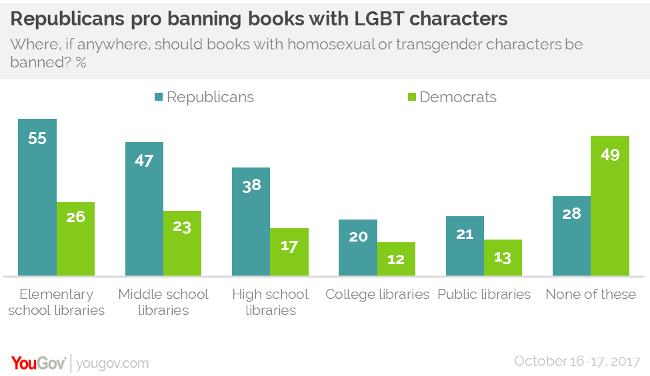
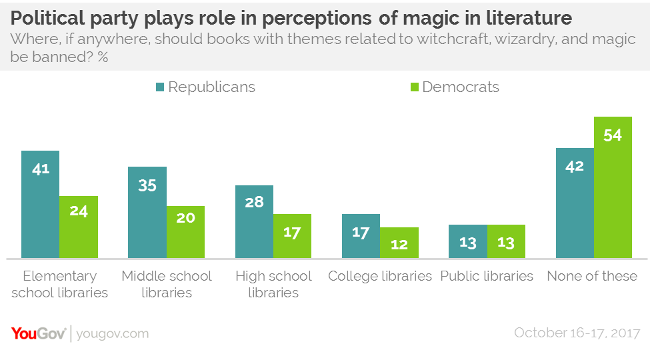
Politics at play when banning books
55% of Republicans think that texts with homosexual or transgender characters should be banned from elementary school libraries. This is Donald Trump's America.


Thursday, July 13, 2017
Autodisciplina desde la escuela
La exasesora en educación del Gobierno sueco Inger Enkvist se posiciona en contra de las nuevas metodologías educativas. Por ANA TORRES MENÁRGUEZ, El País, 13 de julio de 2017
No es fácil encontrar una opinión como la de Inger Enkvist (Värmland, Suecia 1947). Mientras la mayoría de los gurús educativos abogan por terminar con las filas de pupitres, con los formatos de clase encorsetados y por dar más libertad a los alumnos dentro del aula, Envist, antigua asesora del Ministerio de Educación sueco, cree que ha que recuperar la disciplina y la autoridad de los docentes en las clases: "Los niños tienen que desarrollar hábitos sistemáticos de trabajo y para eso necesitan que un adulto les guíe. Aprender requiere esfuerzo y, si se deja a los alumnos elegir, esto simplemente no sucede."

Friday, June 09, 2017
La república de las aulas
Tuesday, May 17, 2016
Homophobia in Spanish Football
![]() |
| Jesús Tomillero at the Real Balompédica Linense stadium in La Línea (Cádiz). |
Monday, February 01, 2016
SPOTLIGHT, Best Film of the Year
Wednesday, November 18, 2015
Why do so many Spanish youngsters smoke?
![]() |
| A 15-year-old girl smokes alongside her 17-year-old friend in Madrid. / SAMUEL SÁNCHEZ |
Saturday, November 22, 2014
Arguments Against Celibacy (The Tip of an Iceberg)
Suspected paedophile Granada priests acted like a sinister sect
Three priests arrested in Granada over pedophilia claims
Thursday, November 21, 2013
El machismo que no cesa
El 10,5% de las chicas de 14 a 19 años reconocen que han sido maltratadas por sus novios, frente al 9,6% registrado por el mismo estudio en 2010. Pero la encuesta revela también que muchas chicas no identifican como maltrato conductas que evidentemente lo son. Así, un 6,2% de las chicas dicen haberse visto obligadas a prácticas sexuales que no deseaban, un 14,6% han sido amenazadas por sus parejas hasta sentir miedo y un 23,2% han sido insultadas y ridiculizadas.
Los estereotipos siguen también ahí, con una prevalencia que sorprende y que debería llevarnos a preguntarnos qué se está haciendo mal en la educación de los valores en España. Por ejemplo, un preocupante 36,3% de los adolescentes piensa que los celos son una expresión de amor, y el 11,7% de los chicos creen que está bien que los hombres salgan con muchas chicas, pero no al revés. En casi todos los apartados se observa un aumento respecto a 2010. Luego retrocedemos.
Y en ese retroceso, los nuevos machistas han encontrado en las nuevas tecnologías, que tanto nos facilitan la vida y la comunicación, una herramienta para ejercer su dominio. Una de cada cuatro chicas afirma que su novio la controla a través del móvil. Hay muchas formas de hacerlo, desde la sutil “envíame un WhatsApp cuando llegues”, a la muy intrusiva “hazme una videollamada” o “pon el localizador”, signo inequívoco de una obsesión por controlarla que puede pagar cara.
El estudio revela hasta qué punto las chicas siguen siendo víctimas de una idea romántica del amor que las lleva a confiar en su pareja hasta el punto de darle sus claves de acceso a las redes o enviarle fotos que, cuando la relación se tuerce, son utilizadas para martirizarlas.
Está claro que la prevención de la violencia de género debe empezar por la educación, pero no parece que la LOMCE la tenga como prioridad. Una asignatura que podría ser idónea para tratar esta cuestión, como Educación para la Ciudadanía, ha desaparecido.
Monday, September 16, 2013
El pánico español a hablar inglés
Si leemos entre líneas, más allá de la vergüenza ajena está la vergüenza propia. Estoy harta de ver en mis aulas alumnos adultos que llevan toda la vida estudiando inglés y apenas pueden hilar un discurso.
Primero, cúlpese a un sistema educativo que nunca ha sabido responder a la demanda de una enseñanza en condiciones de la lengua extranjera. Pero, además, estos alumnos han desarrollado un sentido del ridículo exacerbado, un pánico a hablar inglés, debido a la ansiedad generada precisamente por la mofa con que los errores o la falta de competencia son recibidos en público. Apuesto a que los autores de los ingeniosos chistes no podrían tirar la primera piedra.— Patricia Plaza Arregui. Córdoba
Wednesday, April 07, 2010
Irish Pop Singer Sinead O'Connor on Child Abuse
When I was a child, Ireland was a Catholic theocracy. If a bishop came walking down the street, people would move to make a path for him. If a bishop attended a national sporting event, the team would kneel to kiss his ring. If someone made a mistake, instead of saying, "Nobody's perfect," we said, "Ah sure, it could happen to a bishop."
The expression was more accurate than we knew. This month, Pope Benedict XVI wrote a pastoral letter of apology -- of sorts -- to Ireland to atone for decades of sexual abuse of minors by priests whom those children were supposed to trust. To many people in my homeland, the pope's letter is an insult not only to our intelligence, but to our faith and to our country. To understand why, one must realize that we Irish endured a brutal brand of Catholicism that revolved around the humiliation of children.
I experienced this personally. When I was a young girl, my mother -- an abusive, less-than-perfect parent -- encouraged me to shoplift. After being caught once too often, I spent 18 months in An Grianán Training Centre, an institution in Dublin for girls with behavioral problems, at the recommendation of a social worker. An Grianán was one of the now-infamous church-sponsored "Magdalene laundries," which housed pregnant teenagers and uncooperative young women. We worked in the basement, washing priests' clothes in sinks with cold water and bars of soap. We studied math and typing. We had limited contact with our families. We earned no wages. One of the nuns, at least, was kind to me and gave me my first guitar.
An Grianán was a product of the Irish government's relationship with the Vatican -- the church had a "special position" codified in our constitution until 1972. As recently as 2007, 98 percent of Irish schools were run by the Catholic Church. But schools for troubled youth have been rife with barbaric corporal punishments, psychological abuse and sexual abuse. In October 2005, a report sponsored by the Irish government identified more than 100 allegations of sexual abuse by priests in Ferns, a small town 70 miles south of Dublin, between 1962 and 2002. Accused priests weren't investigated by police; they were deemed to be suffering a "moral" problem. In 2009, a similar report implicated Dublin archbishops in hiding sexual abuse scandals between 1975 and 2004.
Why was such criminal behavior tolerated? The "very prominent role which the Church has played in Irish life is the very reason why abuses by a minority of its members were allowed to go unchecked," the 2009 report said.
Despite the church's long entanglement with the Irish government, Pope Benedict's so-called apology takes no responsibility for the transgressions of Irish priests. His letter states that "the Church in Ireland must first acknowledge before the Lord and before others the serious sins committed against defenceless children." What about the Vatican's complicity in those sins?
Benedict's apology gives the impression that he heard about abuse only recently, and it presents him as a fellow victim: "I can only share in the dismay and the sense of betrayal that so many of you have experienced on learning of these sinful and criminal acts and the way Church authorities in Ireland dealt with them." But Benedict's infamous 2001 letter to bishops around the world ordered them to keep sexual abuse allegations secret under threat of excommunication -- updating a noxious church policy, expressed in a 1962 document, that both priests accused of sex crimes and their victims "observe the strictest secret" and be "restrained by a perpetual silence."
Benedict, then known as Joseph Ratzinger, was a cardinal when he wrote that letter. Now that he sits in Saint Peter's chair, are we to believe that his position has changed? And are we to take comfort in last week's revelations that, in 1996, he declined to defrock a priest who may have molested as many as 200 deaf boys in Wisconsin?
Benedict's apology states that his concern is "above all, to bring healing to the victims." Yet he denies them the one thing that might bring them healing -- a full confession from the Vatican that it has covered up abuse and is now trying to cover up the cover up. Astonishingly, he invites Catholics "to offer up your fasting, your prayer, your reading of Scripture and your works of mercy in order to obtain the grace of healing and renewal for the Church in Ireland." Even more astonishing, he suggests that Ireland's victims can find healing by getting closer to the church -- the same church that has demanded oaths of silence from molested children, as occurred in 1975 in the case of Father Brendan Smyth, an Irish priest later jailed for repeated sexual offenses. After we stopped laughing, many of us in Ireland recognized the idea that we needed the church to get closer to Jesus as blasphemy.
To Irish Catholics, Benedict's implication -- Irish sexual abuse is an Irish problem -- is both arrogant and blasphemous. The Vatican is acting as though it doesn't believe in a God who watches. The very people who say they are the keepers of the Holy Spirit are stamping all over everything the Holy Spirit truly is. Benedict criminally misrepresents the God we adore. We all know in our bones that the Holy Spirit is truth. That's how we can tell that Christ is not with these people who so frequently invoke Him.
Irish Catholics are in a dysfunctional relationship with an abusive organization. The pope must take responsibility for the actions of his subordinates. If Catholic priests are abusing children, it is Rome, not Dublin, that must answer for it with a full confession and in a criminal investigation. Until it does, all good Catholics -- even little old ladies who go to church every Sunday, not just protest singers like me whom the Vatican can easily ignore -- should avoid Mass. In Ireland, it is time we separated our God from our religion, and our faith from its alleged leaders.
Almost 18 years ago, I tore up a picture of Pope John Paul II on an episode of "Saturday Night Live." Many people did not understand the protest -- the next week, the show's guest host, actor Joe Pesci, commented that, had he been there, "I would have gave her such a smack." I knew my action would cause trouble, but I wanted to force a conversation where there was a need for one; that is part of being an artist. All I regretted was that people assumed I didn't believe in God. That's not the case at all. I'm Catholic by birth and culture and would be the first at the church door if the Vatican offered sincere reconciliation.
As Ireland withstands Rome's offensive apology while an Irish bishop resigns, I ask Americans to understand why an Irish Catholic woman who survived child abuse would want to rip up the pope's picture. And whether Irish Catholics, because we daren't say "we deserve better," should be treated as though we deserve less.
For a Spanish translation of this article, click here.
Tuesday, May 26, 2009
Endemic rape and abuse of Irish children in Catholic care
The nine-year investigation found that Catholic priests and nuns for decades terrorised thousands of boys and girls in the Irish Republic, while government inspectors failed to stop the chronic beatings, rape and humiliation.The high court judge Sean Ryan today unveiled the 2,600-page final report of Ireland's commission into child abuse, which drew on testimony from thousands of former inmates and officials from more than 250 church-run institutions. Police were called to the news conference amid angry scenes as victims were prevented from attending.
More than 30,000 children deemed to be petty thieves, truants or from dysfunctional families – a category that often included unmarried mothers – were sent to Ireland's austere network of industrial schools, reformatories, orphanages and hostels from the 1930s until the last facilities shut in the 1990s.
The findings prompted the new Archbishop of Westminster, the Most Rev Vincent Nichols, to say that it took "courage" for those clergy involved in child sex abuse to confront their actions. In an interview to be broadcast tonight on ITV News at Ten, he said: "I think of those in religious orders and some of the clergy in Dublin who have to face these facts from their past which instinctively and quite naturally they'd rather not look at. That takes courage, and also we shouldn't forget that this account today will also overshadow all of the good that they also did."
The Irish Survivors of Child Abuse (Isoca), an organisation set up to help victims, condemned the newly appointed head of the Catholic Church in England and Wales for his remarks.
"Rubbish is too kind of word for what the archbishop has said. I believe I have heard this kind of twaddle uttered by politicians in Ireland like Bertie Ahern, the former prime minister. It is the verbiage of un-reason and it leaves me cold. What the Archbishop really has to do is take a long hard look at the character and nature of the people he is talking about and ask himself if they are capable of being good," said Patrick Walsh.
The report found that molestation and rape were "endemic" in boys' facilities, chiefly run by the Christian Brothers order, and supervisors pursued policies that increased the danger. Girls supervised by orders of nuns, chiefly the Sisters of Mercy, suffered much less sexual abuse but instead endured frequent assaults and humiliation designed to make them feel worthless.
"In some schools a high level of ritualised beating was routine ... Girls were struck with implements designed to maximise pain and were struck on all parts of the body," the report said. "Personal and family denigration was widespread."
The report concluded that when confronted with evidence of sex abuse, religious authorities responded by transferring offenders to another location, where in many instances they were free to abuse again.
"There was evidence that such men took up teaching positions sometimes within days of receiving dispensations because of serious allegations or admissions of sexual abuse," the report said. "The safety of children in general was not a consideration."
The Catholic church had been steeling itself for the report, which was repeatedly delayed by church lawsuits, missing documentation and alleged government obstruction. The Christian Brothers delayed the investigation for more than a year with a lawsuit that successfully defended their members' right to anonymity in all references in the report, even in cases in which individual Christian Brothers had been convicted of sexual and physical attacks on children.
The church had already been under fire over the sexual misbehaviour of several priests in various Irish parishes. The commission's experts have sought to produce a comprehensive portrait of sexual, physical and emotional damage inflicted on the child victims. The thousands of survivors said they had no safe way to tell their stories until the investigation began because much of Irish Catholic society regarded them as liars.
Isoca today said it was now up to the Vatican to investigate its religious orders in the republic. John Kelly, the Isoca co-ordinator in Dublin, said: "Now that the Ryan [Laffoy] commission is finished, we call upon ... Pope Benedict XVI to convene a special consistory court to fully investigate the activities of the Catholic religious orders in Ireland.
"Amongst other things, such a court could establish the whereabouts of Irish state assets that were misappropriated over many years by the religious orders and make restitution to the Irish state exchequer."
During the commission's investigations, oral evidence was collected from more than 1,000 people, mainly aged from their 50s to 70s. Several hundred travelled back to Ireland from the US and Australia to describe their childhood of terror and intimidation.
One victim, John Walsh, of Isoca, called the report a hatchet job that left open wounds gaping. "The little comfort we have is the knowledge that it vindicated the victims who were raped and sexually abused," he said.
"I'm very angry, very bitter, and feel cheated and deceived. I would have never opened my wounds if I'd known this was going to be the end result. It has devastated me and will devastate most victims because there is no criminal proceedings and no accountability whatsoever."
The commission's original judge, Mary Laffoy, resigned from her post in 2003 over claims that the Irish department of education – which was in charge of inspecting the orphanages and industrial schools – was refusing to hand over documents to her.
The Guardian, Henry McDonald, Ireland correspondent guardian.co.uk, Wednesday 20 May 2009
Saturday, March 28, 2009
The Lancet rebukes Pope Benedict
Britain's best-known medical journal, The Lancet, has launched an unprecedented attack on Pope Benedict. The editorial in its current edition accuses the pope of 'distorting scientific evidence' to promote Catholic teaching on the use of condoms. The Lancet editorial is titled "Redemption for the Pope?" Here's the full text: 'The Vatican felt the heat from an unprecedented amount of international condemnation last week after Pope Benedict XVI made an outrageous and wildly inaccurate statement about HIV/AIDS. On his first visit to Africa, the Pope told journalists that the continent's fight against the disease is a problem that "cannot be overcome by the distribution of condoms: on the contrary, they increase it".' 'The Catholic Church's ethical opposition to birth control and support of marital fidelity and abstinence in HIV prevention is well known. But, by saying that condoms exacerbate the problem of HIV/AIDS, the Pope has publicly distorted scientific evidence to promote Catholic doctrine on this issue.'
'The international community was quick to condemn the comment. The governments of Germany, France, and Belgium released statements criticising the Pope's views. Julio Montaner, president of the International AIDS Society, called the comment "irresponsible and dangerous". UNAIDS, the UN Population Fund, and WHO released an updated position statement on HIV prevention and condoms, which said that "the male latex condom is the single, most efficient, available technology to reduce the sexual transmission of HIV". Amidst the fury, even the Vatican tried to alter the pontiff's wording. On the Holy See's website, the Vatican's head of media, Father Federico Lombari, quoted the Pope as having said that there was a "risk that condoms...might increase the problem".'
'Whether the Pope's error was due to ignorance or a deliberate attempt to manipulate science to support Catholic ideology is unclear. But the comment still stands and the Vatican's attempts to tweak the Pope's words, further tampering with the truth, is not the way forward. When any influential person, be it a religious or political leader, makes a false scientific statement that could be devastating to the health of millions of people, they should retract or correct the public record. Anything less from Pope Benedict would be an immense disservice to the public and health advocates, including many thousands of Catholics, who work tirelessly to try and prevent the spread of HIV/AIDS worldwide.'


