Sunday, October 11, 2020

This Year’s Nobel Prize in Chemistry Honors a Revolution

With Crispr, two scientists turned a curiosity of nature into an invention that will transform the human race.


, The New York Times, Oct. 7, 2020
Credit...Miguel Riopa/Agence France-Presse — Getty Images

When Jennifer Doudna was in sixth grade, she came home one day to find that her dad had left a paperback titled “The Double Helix” on her bed. She put it aside, thinking it was one of those detective tales she loved. When she read it on a rainy Saturday, she discovered she was right, in a way. As she sped through the pages, she became enthralled by the intense drama, filled with colorful characters, about ambition and competition in the pursuit of nature’s wonders. Even though her high school counselor told her girls didn’t become scientists, she decided she would.

She would help to make what the book’s author, James Watson, later told her was the most important biological advance since he and Francis Crick discovered the structure of DNA. She worked with a brilliant Parisian biologist named Emmanuelle Charpentier to turn a curiosity of nature into an invention that will transform the human race: an easy-to-use tool that can edit DNA. Known as Crispr, it ushered in a brave new world of medical miracles and moral questions.

For this accomplishment, on Wednesday they were awarded the Nobel Prize in Chemistry. It is a recognition that the development of Crispr will hasten our transition to the next great innovation revolution. The past half-century has been a digital age, based on the microchip, the computer and the internet. Now we are entering a life-science era. Children who study digital coding will be joined by those who study the code of life. It will be a revolution that will someday allow us to cure diseases, fend off virus pandemics and (if we decide it’s wise) to design babies with the genetic features we want for them.

Crispr is especially relevant in this year of the coronavirus. The gene-editing tool that Dr. Doudna and Dr. Charpentier developed is based on a virus-fighting trick used by bacteria, which have been battling viruses for billions of years. In their DNA, bacteria develop clustered repeated sequences, known as Crisprs, that can remember and then destroy viruses that attack them. In other words, it’s an immune system that can adapt itself to fight each new wave of viruses — just what we humans need in an era that has been plagued by repeated viral epidemics.

The award is also a great testament to the growing power of women in the life sciences. When Rosalind Franklin made the images that helped James Watson and Francis Crick discover the structure of DNA, she became just a minor character in the early histories, and she died before she could share a Nobel Prize. Until now, only five women, beginning with Marie Curie in 1911, have won or shared the Nobel for chemistry, out of 184 honorees. When this year’s prize was announced, Dr. Charpentier said it would “provide a message specifically to young girls who would like to follow the path of science and to show them that in friendship women can also be awarded prizes.”

Crispr is now being used to treat sickle-cell anemia, cancers and blindness. And this year, Dr. Doudna and her research teams began exploring how Crispr could detect and destroy the coronavirus. “Crispr evolved in bacteria because of their long-running war against viruses,” Dr. Doudna told me. “We humans don’t have time to wait for our own cells to evolve natural resistance to this virus, so we have to use our ingenuity to do that. Isn’t it fitting that one of the tools is this ancient bacterial immune system called Crispr? Nature is beautiful that way.”

In November 2018, He Jiankui, a young Chinese scientist who had been to some of Dr. Doudna’s gene-editing conferences, shocked the world by using Crispr to help produce the world’s first “designer babies.” He edited human embryos to remove a gene that produces a receptor for H.I.V., the virus that causes AIDS. There was an immediate outburst of awe and then shock. After more than three billion years of evolution of life on this planet, one species (us) had developed the talent and temerity to grab control of its own genetic future. There was a sense that we had crossed the threshold into a whole new age, perhaps a brave new world, as when Adam and Eve bit into the apple or Prometheus snatched fire from the gods.

Crispr raises some tough moral questions. Should we edit our species to make us less susceptible to deadly viruses? In the midst of this coronavirus plague, most of us probably think that would be a wonderful boon. Right? Should we eliminate disorders such as Huntington’s, sickle-cell anemia and cystic fibrosis? That sounds good, too. And what about congenital deafness or blindness? Or being short? Or depressed? Hmm. How should we think about that? A few decades from now, if it becomes possible and safe, should we allow parents to enhance the IQ and physical strength of their kids? Should we let them decide eye color? Skin color? Height?


After helping to discover Crispr, Dr. Doudna has become a thought leader on these moral issues. That’s the main message we should take from this year’s Nobel Prize in Chemistry: New technologies can be a huge benefit to the human race, but in order to make sure they are used wisely, it’s important for people to understand them. By shining a light on gene editing, the Nobel committee is bringing a needed awareness of the wonders of nature — and of the technology that will increasingly determine how nature works.

Saturday, October 10, 2020

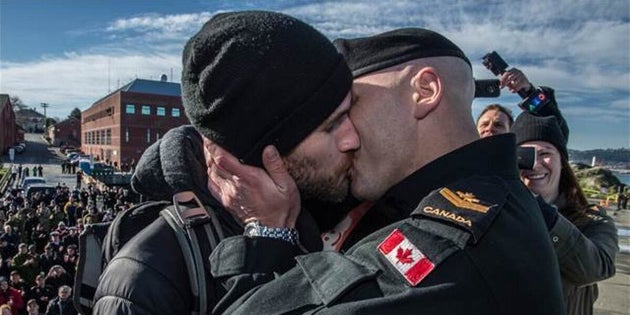
Proud Boys Kiss (A Canadian story)

Canadian Armed Forces Trolled The Proud Boys

A hashtag used by the far-right hate group Proud Boys has been hijacked by the LGBT+ community.

TWITTER
"If you’re thinking about wearing our uniform, know what it means. Love is love," the message accompanying the image said.

A hashtag used by the far-right hate group, Proud Boys, has been hijacked by the LGBT+ community. 

The white supremacist group gained notoriety earlier this week when US President Donald Trump refused to publicly condemn them during the first presidential debate with Joe Biden.

Responding to a question from moderator Chris Wallace, who asked if he would condemn white supremacist and militia groups that have showed up at some protests, Trump said: “Sure, I’m willing to do that. But I would say almost everything I see is from the left wing, not from the right wing.”

On the Proud Boys’ account on the messaging app Telegram, members of the group celebrated the apparent endorsement. 

“Trump basically said to go fuck them up,” said one of the Proud Boys’ leaders in a chat on the right-wing social media app Parler. “This makes me so happy.”

In response, gay men have taken to Twitter to reclaim the #ProudBoys hashtag, flooding it with photos of happy – and proud – gay couples.

Among those who have posted in support of the hashtag include the Canadian armed forces, who tweeted a photo of one of their members kissing another man.

Accompanying the photo was the message: “If you wear our uniform, know what it means. If you’re thinking about wearing our uniform, know what it means. 

“Love is love. Know what we mean?”

The tweet has been retweeted more than 7,000 times within hours of being posted.

The hijacking of the #ProudBoys hashtag has been partly attributed to actor and activist George Takei, who wrote: “What if gay guys took pictures of themselves making out with each other or doing very gay things, then tagged themselves with #ProudBoys.”

The LGBT+ community responded immediately with rainbow flags and messages and images of queer love and pride.

Love is love – and we’re 100% for it. 

Wednesday, September 30, 2020

Looking_series + film


HBO's series Looking offers up the unfiltered experiences of three close friends living — and loving — in modern-day San Francisco. Friendship may bind them, but each is at a markedly different point in his journey: Patrick (Jonathan Groff) is the 29-year-old video game designer getting back into the dating world in the wake of his ex's engagement; aspiring artist Agustín (Frankie J. Alvarez), 31, is questioning the idea of monogamy amid a move to domesticate with his boyfriend; and the group's oldest member — longtime waiter Dom (Murray Bartlett), 39 — is facing middle age with romantic and professional dreams still unfulfilled. The trio's stories intertwine and unspool dramatically as they search for happiness and intimacy in an age of unparalleled choices —and rights — for gay men. Also important to the 'Looking' mix is the progressive, unpredictable, sexually open culture of the Bay Area, with real San Francisco locations serving as a backdrop for the group's lives.

Looking is likely the most realistic depiction of living as a modern gay man that television has ever seen. It’s groundbreaking stuff — stunningly honest and brutally fair with its flawed characters’ search for meaning in love and life. The series follows Patrick and his two friends Agustin and Dom, as they maneuver through their 20s and 30s in San Francisco. The title borrows a term from gay hook-up culture — the message “Looking?” on an app such as Grindr is simultaneously a salutation and an invitation — and alludes to the search for oneself. 

Created by Andrew Haigh and co-written by Michael Lannan. Two seasons plus a film downloadable on this link. And wait for the music that comes with the final credits. Unmissable. Totally!


Monday, September 21, 2020

I Need the World to Care That Our Country Is on Fire

Would you feel more urgency about climate change if all you could see was smoke?


By CHARLIE WARZEL
The New York Times, Sunday, 20 September, 2020

If you’ve never experienced a fire season before, it’s hard to explain the emotional, physical and sensory effects of having the world immolate before your eyes.
I spent decades with only a passing knowledge of wildfires. I’d read about smoke jumpers and fire seasons, sure. I’d seen the news videos of planes and helicopters dumping water on burning hillsides. I have distinct memories of images of the California countryside at night with a raging fire threatening a neighborhood development and reports of evacuations and deaths. It seemed awful and cruel and arbitrary — but also like something happening in a distant part of the world. I empathized, but I didn’t understand.
Then I moved West. I arrived in my new home in Montana in 2017 only 10 days before a July thunderstorm tore through the Bitterroot Valley and ignited a fire that burned for two months and devastated 53,902 acres of land 20 miles from my home.
If you’re lucky, it comes on slowly. You awake one morning and you notice the smell. For me, it was the distinct smell of a campfire having just been extinguished. It’s an uncanny sensation that doesn’t fade. The air is hazy; the blue sky fades to a cloudy white in the direction of the fire. Before long, the smell and the haze increase. For me, a dull headache begins alongside a tickle in the back of my throat, similar to the way I feel when spring allergies begin.

If the fire isn’t contained, every hour gets worse from there, and the world takes on an apocalyptic quality. That first Montana summer, I remember sitting in the bleachers of Missoula’s minor league baseball stadium. At the beer stand, I gazed out across the valley to see an unmoving column of smoke shaped like the funnel of a tornado thousands of feet high.
Its plume widened until it mingled with the clouds above, forming an oppressive ashy dome over my town. Behind it the sun set, drawing out otherworldly reds and yellows. It felt like living on an uninhabitable planet. They never told me that the sunsets at the end of the world would be so striking.
Then even those colors fade. You wake up in darkness and you’re left with soot — in the sky, on your car, your windows, your driveway, your trees, your lawn. Eventually, those allergy feelings turn into a deeper malaise, which is fed by the sepia skies that resemble nuclear winter.
Leaving the house feels both pointless and dangerous. My first fire season, I was stopped during a run by a police officer who told me to go home immediately. It simply wasn’t safe to be breathing the air outside, he told me.
This is what happens if you’re one of the lucky ones who are affected only by the byproduct of those raging fires. I consider myself fortunate to have never seen one from less than a dozen or so miles away. But for those who encounter them — or have to live in their proximity, and grapple with the long-term health ramifications — it is hell on earth.
At a biometrics conference in 2019, I listened to a Department of Homeland Security official give a presentation on the Camp Fire in Paradise, Calif., which was fueled by nearly 90-mile-an-hour wind gusts. He was there to talk about the use of cutting-edge technology to identify the charred remains of some of the fire’s more than 80 victims. The presenter’s anecdotes included the story of one couple who awoke in the night because their Amazon Alexa smart speaker was chirping that it had been disconnected. When they came to, they saw two-thirds of their house ablaze. They managed to escape; their pets and possessions did not.
Since I moved West, I’ve been preoccupied with this question: Would Americans feel a greater sense of alarm about our rapidly warming planet and the disastrous, perhaps irreversible effects of climate change if everyone could experience a fire season in person? Would cable news hosts devote the same nonstop coverage to fires as they do for hurricanes if more of their executives woke up each morning to falling ash? Would more lawmakers care if it looked like this outside the Capitol at high noon?

The American West does not have a monopoly on climate-related disasters. Hurricane seasons grow worse each year and devastating earthquakes loom. The flooding in the Midwest and storms like the recent derecho in Iowa are calamities that deserve equal attention. They’re also urgent alarm bells. Everyone on earth right now is experiencing unpredictable and dire weather. No region is alone in experiencing the tragedy of our dying planet.
I’m not so naïve as to think that all Americans would, say, support a Green New Deal if they had to confront a California fire season head-on — that’s not even the case for California residents! But there is a surrealness to these wildfires and their profound impact that remains difficult to explain to anyone who hasn’t experienced them.
Unlike a storm that makes landfall and barrels through, leaving destruction in its path, the encroaching infernos descend for days, weeks, even months, and become part of our lives. It feels both like the end of days and like the new normal — a stultifying Instagram filter fitted over our eyes at all times.

The point of this column isn’t to guilt people for where they live or what they’ve experienced, but to convey the desperation that so many Americans are feeling right now. It’s an anxiety that deepens each year. One that turns cloudless summer days in July into harbingers of misery. It’s a psychological toll, as much as it is physical. One that, while you’re living through it, renders it difficult to see a healthy future for the earth through all the smoke.

Charlie Warzel, a New York Times Opinion writer at large, covers technology, media, politics and online extremism. He welcomes your tips and feedback: charlie.warzel@nytimes.com | @cwarzel

Thursday, August 20, 2020

Manual para una educación con tecnología menos nociva

"La tecnología crea serias hipotecas en el aprendizaje y no debemos confiar la educación a ella." Catherine L'Ecuyer, doctora en Educación y Psicología, es una de los más de cien expertos firmantes de un manifiesto contra las pantallas como eje educativo principal durante la pandemia.

Por BEATRIZ LUCAS
El País, 20 de agosto de 2020


Catherine L'Ecuyer, autora de 'Educar en el Asombro' y 'Educar en la realidad'.

Para Catherine L’Ecuyer (Quebec, 1974) la tecnología en la educación es “como el traje nuevo del emperador. Todos lo saben pero nadie se atreve a decirle que va desnudo”. Ella es una de los más de cien pedagogos, científicos y médicos firmantes en EE UU de un manifiesto contra la tecnología como eje educativo principal durante la pandemia y que ha promovido también con una petición en Change.org. El documento, ya traducido al español, reclama a los gobiernos alternativas y propone soluciones más allá de las pantallas. Además, respalda con más de una veintena de estudios científicos los efectos nocivos del abuso tecnológico en el desarrollo de la infancia y alerta del comercio que las empresas hacen con los datos de las familias aprovechando estos momentos de vulnerabilidad.

Este movimiento aspira a convertirse en global y ya busca en España y los países de lengua hispana respaldo de entidades, docentes y familias que apuesten por otra forma de educar a los niños sin comprometer su desarrollo. L’Ecuyer, psicóloga y especialista en educación, madre de cuatro hijos afincada en Barcelona y autora de los libros Educar en el Asombro y Educar en la realidad —más de 100.000 ejemplares vendidos en ocho idiomas y más de 50 países— explica por qué se ha comprometido con esta campaña y deja una pregunta para la reflexión. “¿Por qué si la tecnología es tan beneficiosa para el desarrollo de los niños, los altos ejecutivos de las empresas tecnológicas de Silicon Valley escolarizan a sus hijos en escuelas sin pantallas?”

Pregunta: ¿Por qué surge este manifiesto y qué busca?

Respuesta: Esta campaña la han promovido dos organizaciones que trabajan en defensa de los derechos de la infancia —Campaign for a Commercial-free Childhood (Infancia libre de comercio) y Children´s Screen Time Action Network (Red de acción sobre la exposición de la infancia a las pantallas)— que han protagonizado ya algunas batallas judiciales contra empresas como Baby Einstein por vender beneficios educativos que no existen, o con Google (Youtube Kids), por comerciar con los datos de los niños. Y yo la he respaldado y he iniciado una petición en Change.org porque está por demostrar la eficacia de la tecnología como solución educativa. Es una respuesta facilona simplista y rápida: parece que resuelve el problema, pero la evidencia científica demuestra que la educación con tecnología no es mejor y en cambio puede tener efectos negativos. Nos han vendido la idea de que los niños llevan las riendas ante la pantalla, pero en realidad no es así: como su mente es inmadura, el niño es como un puerto USB que reacciona ante unos estímulos frecuentes e intermitentes programados por algoritmos. La tecnología crea serias hipotecas en el aprendizaje y no debemos confiar la educación a ella.

P: ¿Cuáles son esas hipotecas?

R: Muchos pediatras, pedagogos y docentes firman este documento porque les preocupa el efecto de la sobreexposición a las pantallas en la salud neurológica de los niños y su desarrollo cognitivo. Pero somos David contra Goliat. La industria tecnológica tiene muchos medios para hacer llegar su marketing y sus estudios parciales pero nosotros solo tenemos los medios de comunicación y campañas como esta para llegar a los padres. Cada semana recibo decenas de correos de padres indignados porque les han impuesto en sus aulas tabletas obligatorias y chrome books sin consultarles y no saben a dónde dirigirse. Cuando acuden a la dirección del centro ya es tarde porque han firmado un contrato con la empresa tecnológica y no hay marcha atrás ¿Cómo puede ser que no haya una movilización masiva en contra de esto? Esta campaña quiere divulgar los estudios científicos que demuestran que la tecnología no es tan educativa como nos venden y busca la concienciación y movilización de los ciudadanos para romper con esa inercia. La población general debe saber lo que está pasando y lo que está en juego.

P: ¿Y qué es lo que está en juego?

R: Mucho más de lo que creemos. Los estudios indican que los niños menores de seis años aprenden a través de las relaciones interpersonales y las experiencias sensoriales, por lo que no tiene sentido ofrecerles contenidos online en esa franja de edad. Es más, hay una relación entre el consumo de pantallas en edades tempranas y la inatención, la impulsividad, la disminución del vocabulario, el déficit de aprendizaje, las adicciones, y problemas de vista, trastornos del sueño, obesidad... Hay un estudio que demuestra que por cada hora diaria de pantalla en menores de tres años aumenta un 10% la probabilidad de sufrir inatención con siete años. Esto está relacionado con que los dispositivos imponen a los niños que los usan ritmos frenéticos, músicas estridentes, luces, colores... y los pequeños se vuelven inquietos, ansiosos y se aburren en los ritmos más lentos que ofrece la realidad. La Sociedad Canadiense de Pediatría y la Academia Americana de Pediatría recomiendan que los niños de menos de dos años no vean nada de pantallas y los de dos a cinco años, menos de una hora al día.

P: Y según los estudios que cita el manifiesto ¿por qué tienen este efecto las apps educativas?

R: Con el juego libre o semiestructurado, el niño busca retos que se ajustan a sus capacidades, por eso suben a los toboganes por la pendiente, para ellos subir por las escaleras es demasiado fácil. En el juego libre es el niño el que planifica y protagoniza su propia experiencia de aprendizaje. Hace trabajar la memoria, tiene que inhibir los estímulos externos, medir sus límites y aprender a autocontrolarse. Las aplicaciones dirigidas por algoritmos son todo lo contrario: el niño va a remolque de lo que recibe, se vuelve pasivo y se acostumbra a estímulos cada vez más rápidos. Acaba inadaptado a la realidad, porque está es demasiado lenta. Esto contribuye a la pérdida del interés por aprender, de la iniciativa. Hemos de saber que muchas aplicaciones están diseñadas para dirigirles y tenerles conectados durante el mayor tiempo posible.

P: ¿Y qué consecuencias tiene para el aprendizaje?

R: El efecto no es el mismo en los niños que en los adultos. Los niños necesitan que respetemos su asombro, su deseo de conocer, pero las tecnologías tienen el efecto contrario: lo hacen todo por él acostumbran a los pequeños a los estímulos inmediatos y acortan el tiempo de atención. Y sin atención no hay aprendizaje. Los profesores lo notan en las escuelas, cada vez los estudiantes tienen menos capacidad de atender a las explicaciones y de concentrarse. Haríamos bien en preguntarnos por qué los directivos de empresas tecnológicas del Sillicon Valley mandan a sus hijos a colegios privados que hacen bandera de no usar tecnología, mientras sus empresas venden dispositivos a colegios públicos de la misma zona. Ellos pueden permitirse el lujo de las relaciones interpersonales. Si algo nos ha quedado claro con esa pandemia es que necesitamos interacción personal. Entonces, si podemos permitirnos ese lujo, ¿por qué prescindir de él?P: ¿Y qué consecuencias tiene en el aprendizaje?

P: ¿Y los adolescentes?

R: Hemos de ayudarles a no confundir la conexión wifi con la conexión humana. Tienen carencias de experiencias reales y humanas. El año pasado YouGov sacaba un estudio que demostraba que los milennials son la generación que se siente más sola en nuestra sociedad. El 27% no tiene amigos cercanos y el 30% no tiene un “mejor amigo” a pesar de pasar muchas horas al día conectados en redes. Los padres pensamos que cuando compramos los dispositivos les ayudamos a socializar, pero no es así. Darles un móvil con conexión a Internet cuando no están preparados a ello, no les ayuda a estar más en el mundo, contribuye a aislarles, les resta oportunidades de experiencias interpersonales reales y humanas. Para un adulto maduro y consolidado afectivamente, las redes sociales pueden ser inocuas. Pero los adolescentes tienen un concepto de sí mismos aun frágil y es más fácil para ellos entrar en unas dinámicas obsesivas por la validación de sus iguales, por el “me gusta”. Eso crea relaciones superficiales, frívolas.

P: ¿Cómo aplica esta política de reducción de pantallas en casa con cuatro hijos, adolescentes incluidos?

R: Que estemos en contra del abuso de las pantallas no implica que vivamos desconectados del mundo. En casa tenemos una tele que usamos para ver cine que nosotros seleccionamos y noticias puntualmente. Tenemos dos móviles con Internet y dos ordenadores, pero solo sirven para mi trabajo y el de mi marido. Durante el confinamiento, usamos un dispositivo adicional de forma excepcional para que cada uno supiera las tareas que tenía y lo usara el menos tiempo posible, en una franja horaria concreta y con supervisión. Y tenemos un móvil sin internet que a partir de los 14 años pueden usar para hacer llamadas cuando lo necesitan. No usan pantallas como ocio, salvo el cine, o para buscar recetas si cocinan, o para comunicarse por Skype con la familia de Canadá. Y nunca se han quejado porque tienen miles de aficiones en el mundo off line. En el confinamiento, mis tres hijos mayores han tenido dos horas al día con todas las explicaciones del profesor online y el resto de material en papel. Y muchísimas lecturas. Mi hija de nueve años no ha hecho nada online, todo en papel. Y eso nos ha funcionado muy bien, ha sido una oportunidad para crecer en autonomía y en responsabilidad.

P: ¿Cómo podemos plantear una respuesta educativa adecuada sin tecnología si nos vuelven a confinar?

R: Estamos ante algo muy excepcional y nadie tiene la respuesta perfecta. Tenemos que aprender a vivir con la incertidumbre viendo qué uso hacemos de las pantallas sin convertirlas en la escuela. Por ejemplo, las recomendaciones de las asociaciones de pediatras hacen una excepción y permiten videollamadas con personas con las que el niño tiene un vínculo de apego, después de que los estudios demostrasen que podía ser positivo que un niño se comunique por Facetime con un familiar cercano que, por motivo laboral, estaba fuera de su país. Esto podemos trasladarlo al ámbito educativo. En un vídeo de un profesor a sus alumnos no hay sonidos estridentes, ni algoritmos que decidan por ellos, y hay una relación previa con la persona. No me parece mal que, en una situación tan excepcional como es la de una pandemia global, un alumno de 13 años reciba dos horas de clase en grupos reducidos de materias básicas impartidas por un docente que ya conoce. Pero deben combinarse con algo analógico —leer y escribir en papel, hacer tareas que requieran atención sostenida—. Debemos dejar al margen las aplicaciones dirigidas por algoritmos y los vídeos de Youtube. Para introducir las tecnologías de forma masiva, algunos recurren al argumento de la conciliación durante el confinamiento. Pero uno de los problemas con los ejercicios online descontextualizados es que el niño siempre va a necesitar a sus padres. Si usa aplicaciones y no hay un maestro que actúe de intermediario para explicar la materia y que resuelva dudas en directo, el padre tiene que estar explicándole o ayudándole todo el rato y eso requiere que se convierta en maestro. Durante el confinamiento, algunos padres hemos tenido que improvisar el don de la bilocación.

P: Las administraciones han optado por la compra de dispositivos en España para reducir la brecha digital. Pero usted niega la existencia de esa brecha. ¿Por qué?

R: El argumento de la brecha digital asume que dotar masivamente de tecnología a los alumnos de entornos sociales más complicados mejora sus resultados académicos y por lo tanto reduce las desigualdades sociales. Los estudios demuestran justamente lo contrario: se da un incremento de las conductas abusivas de esta tecnología en entornos sociales más complicados.

P: ¿Cómo deberíamos entonces abordar esta situación?

R: Facilitar un dispositivo o Internet a quienes no lo tienen en tiempo de pandemia si van a estar tres meses encerrados no me parece mal si es solo para recibir clases online poco tiempo al día, bajo supervisión y el alumno tiene más de 11 años. Otra cosa sería digitalizar todo para siempre. En cualquier caso, hemos de ser conscientes de que la educación online es un drama en hogares con graves problemas donde hay violencia, abusos... Para esos niños, la escuela podría ser el entorno seguro que les dé una oportunidad de salir adelante. Los dispositivos no solucionan sus dificultades sociales ni su desventaja. En vez de invertir en soluciones tecnológicas cortoplacistas, las administraciones deberían centrarse en implantar las medidas de seguridad necesarias, e invertir en la reducción de las ratios y en proporcionar todos los medios a los centros escolares para que fueran seguros para poder garantizar la presencialidad en las aulas. La educación es un asunto humano, no tecnológico.


MANUAL PARA UNA EDUCACIÓN CON TECNOLOGÍA MENOS NOCIVA

El manifiesto propone algunas pautas para evitar los efectos nocivos de las Tecnologías Aplicadas a la Educación:

· Limitar el tiempo de pantallas. Utilizar la tecnología solo cuando sea necesario para la comunicación, colaboración, investigación o expresión creativa del aprendizaje del alumno. Se deben evitar las plataformas de aprendizaje adaptativo guiado por algoritmos, la gamificación y las aplicaciones similares que incorporan diseños persuasivos para retener conectados a los niños. 

· Dar mayor prioridad e importancia al papel del maestro. Los maestros y profesores involucran mucho mejor a los estudiantes de lo que lo hacen las Tecnologías Aplicadas a la Educación consiguiendo que el estudiante esté más motivado y haciendo el aprendizaje sea auténtico. Si fuera necesario el aprendizaje a distancia, éste debería inspirarse en las interacciones humanas y diseñarse garantizando un alto compromiso y participación con aprendizaje basadas en proyectos y vivencias reales que les permitan ser protagonistas de su educación. 

• Optimizar el aprendizaje sensorial, el formato analógico. Los estudiantes, especialmente los más pequeños y los que tienen necesidades especiales, aprenden mejor a través de las experiencias sensoriales, de modo analógico. Las escuelas deben optimizar ese modo de aprendizaje, incluso cuando los estudiantes están en sus hogares, con actividades estructuradas como la lectura de libros en papel, la escritura a mano, el arte, el movimiento, el juego al aire libre, los proyectos de matemáticas que guarden relación con el mundo real y la exploración de la naturaleza. 

• Apoyo a las familias. Si vuelve ha haber un confinamiento, las escuelas deben apoyar a las familias proporcionando libros físicos, y materiales que no todas las familias están en condiciones de conseguir. 

• Evitar las compras y las decisiones apresuradas durante la pandemia Puedan llevar a un uso excesivo de las Tecnologías Aplicadas a la Educación durante años, incluso tras la pandemia. En vez de ello debería apostarse por invertir en los educadores. 

• La privacidad sí que importa. Las escuelas tienen la obligación de evitar riesgos para la privacidad de sus estudiantes antes de contratar una plataforma o servicio para ellos. Deben evitar los servicios que no estipulen claramente quiénes podrán acceder a los datos personales de los estudiantes y con qué fines. Tampoco deben proporcionar plataformas o aplicaciones que contengan publicidad.


Wednesday, August 19, 2020

Wednesday, August 05, 2020

A Shitstorm, by cartoonist Max


A shitstorm (online bullying) happens when, as we say in English, the shit hits the fan. Beware of what you tweet, as internet trolls seem to lead a rather boring life! See related article: Los nuevos "inquisidores" acechan en la red, by Javier Salas