Compound adjectives that express the idea of with or having often end in -ed. For example, a a guy with blue eyes is a blue-eyed guy. These -ed endings are often known as "false participles":
A baby with curly hair is a curly-haired baby.
A cat with one leg is a one-legged cat. (Here notice the pronunciation and spelling of "legged".)
A girl with black hair and green eyes = a black-haired, green-eyed girl.
A robber with one eye = a one-eyed robber.
A model with long legs = a long-legged model.
Compound adjectives with expressions of time, quantity, weight, distance or measurement do not use the plural s in the noun of the compound:
A journey that lasts 12 hours is a 12-hour journey. (Note that "hour" is singular.)
A baby that weighs seven pounds = a seven-pound baby.
A walk of 20 miles = a 20-mile walk.
A holiday that lasts 2 weeks = a 2-week holiday.
Sentence Transformation Exercise:
1. My bag was stolen by a teenager with green hair
A green-...
2. Bruce Springsteen gave a concert that lasted four hours.
Bruce Springsteen gave a four-...
3. A man who was dressed in smart clothes came to see you.
A well-...
4. The competition was won by a model with blue eyes and blonde hair.
A blue-...
5. That job pays well.
That's a well-...
Thursday, May 14, 2020

Wednesday, May 13, 2020
Online Learning Is Best in a Supporting Role
Online Learning Should Return to a Supporting Role

By DAVID DEMING
The New York Times, April 9, 2020
As the coronavirus pandemic forces schools and college campuses to go online, the delivery model of education — largely unchanged for centuries — has suddenly been disrupted.
This may seem like the acceleration of a permanent shift toward online learning, but I have my doubts. In fact, economics tells us that technology will make in-person education more valuable than ever.
At the moment, teachers from kindergarten through graduate school are struggling to take their classes online, and the initial results are, understandably, spotty. But the longer this mass experiment continues, the more familiar remote learning will become. And, has been predicted for many years, online performances by superstars are increasingly likely to replace more pedestrian in-person lectures.
This can go only so far, because other important aspects of education are best done by teachers in more intimate settings. Educators will increasingly be tutors, mentors and role models, and economics also tells us that these features of a great education will not scale up.
Therefore, I worry not about the future of teachers but of students. I fear that on-campus learning will become an increasingly important quality differentiator, a luxury good that only students with means can afford.
Consider that online education has been around a lot longer than Covid-19. According to the latest estimates from the Department of Education, 35 percent of college students took at least one course online before the pandemic, and this share has been growing steadily for more than a decade.
This spring, schools and universities had to move courses online with only a few weeks’ notice, and the results have often been ugly. Students face significant challenges, such as spotty access to the internet or an unstable living environment.
Yet the long-term prospects for online learning are good — up to a point. Many universities already offered high-quality lectures online before this crisis, sometimes through partnerships with organization like edX and Coursera. Khan Academy has offered free courses for younger learners. The increased flexibility of online learning has been especially important when students need to balance burdens like jobs or, right now, to care for themselves or relatives who have fallen ill.
After this crisis ends, online lectures will still be increasingly valuable, because they are known in economics as “nonrival goods,” meaning they are not used up as more and more people view them. For this reason, the very best lecturers can teach everyone at the same time. This could make lesser lecturers obsolete and should, at least to some degree, generate much-needed productivity growth in education.
This seems grim for teachers, but I don’t think it will make us obsolete, for two reasons.
First, demand for education is a moving target, and as people become more prosperous they typically want better education, not worse.
So while cost is important, it’s not everything. Bending the higher-education cost curve through online lectures may seem appealing, but the point isn’t to enable everyone to learn on the cheap. Rather, people will want better education for the money, and online lectures alone won’t do it.
This explains why massive open online courses, known as MOOCs, have largely failed to disrupt traditional education despite the hype. Lectures are part of education, but they are not the best part.
Second, as online lectures become better and cheaper, the other essential components of education will take more time and energy.
Within economics this is known as unbalanced growth: the tendency for resources to shift toward parts of the economy where productivity growth is lowest. It is partly why the bulk of U.S. employment has moved away from manufacturing and into the service sector and, in education, why tuition and salaries keep rising. Precisely because they are personal, services are hard to scale up — few people are interested in mass-produced child care, for example.
The personal services provided by educators include tutoring, individualized feedback and mentoring, and numerous studies, as well as countless individual experiences, show that such services are essential for learning.
Good teachers work with students individually or in small groups to diagnose and remedy specific learning gaps. A survey of nearly 200 educational experiments found that “high dosage” tutoring — defined as groups of no more than six students meeting at least four times per week — was one of the most effective ways to improve learning. High-frequency individual feedback also greatly improves student performance.
Teachers are critically important as mentors and role models as well, the studies show. Students are more likely to complete a college degree when teachers have high expectations of them. A female instructor greatly increases the performance of women in math and science courses and their subsequent interest in STEM (science, technology, engineering and mathematics) careers.
Furthermore, racial gaps in course performance are smaller in classes taught by professors from underrepresented groups. Yet the implications of this research extend even beyond race and gender. Mentors matter for everyone, and they can have a powerful impact on students’ life choices and career success. There is simply no technological substitute for these aspects of great teaching.
Because of unbalanced growth, efficiency gains in online instruction will cause educators to shift toward more personal forms of education. Moreover, what economists call “cost disease” tells us that the price of tutoring, mentoring and direct personal intervention will rise, even as lectures are provided more efficiently online.
If these trends continue unchecked, on-campus learning and intensive interaction between teachers and students may eventually become unaffordable for all but the wealthiest institutions and, probably, the wealthiest families.
Two changes are necessary to avoid this tragedy.
First, we must broaden access to institutions that can afford a high-quality on-campus experience. Second, universities under budgetary pressure should resist the temptation to think of online learning technology only as a means of cost reduction.
It is wonderful that technology has enabled millions of students to keep learning even when direct contact is impossible. But once this crisis ends, we will be better off if technology frees up precious class time so that educators and students can engage deeply with each other and build personal connections that will last a lifetime.
David Deming is the director of the Malcolm Wiener Center for Social Policy at the Harvard Kennedy School.
Friday, May 08, 2020
Video calls could be draining your energy in lockdown
Are you finding video calling exhausting in lockdown? According to the World Economic Forum, this is why:
Experts say that chatting online requires more concentrations than meeting face-to-face. (Source: BBC)
Poor-quality video can make it tricky to read facial expressions.
Framing means it is harder to read body language, a key part to communication. And eye contact, which is normally a strong facial cue, can be uncomfortable online. (Source: Gianpiero Petriglieri)
Then there is the added social pressure of being on camera. Many say they find it nerve-wracking and stressful. (Souce: Dr Linda Hill, Edge Hill University)
Delays caused by slow internet speed can cause anxiety, while silence creates a natural rhythm in real-life conversation. A study in Germany found 1.2-second silence makes the responder seem less friendly. (Source Science Direct)
Video chats in large groups can be less productive because the focus is on the person speaking, ignoring responses from the rest of the team.
(Source: Behrens, F., Kret, ME, Journal of Nonverbal Behaviour)
Multi-person screens challenge our central vision forcing our brains to multitask. Psychologists call it “continuous partial attention.”
(Source: National Geographic)
And suggest sometimes switching off your camera in group chats, placing your screen off to one side, which could help concentration, or making a voice call instead.
(Source: Harvard Business Review)
Tuesday, May 05, 2020
I am Syd Stone_short film
Hollywood heartthrob, Syd Stone, returns home to attend his 10-year high school reunion. The only person granted access to his grandiose hotel suite is Brent, the other half of Syd's closeted high school relationship. From the moment they reconnect, the past comes back to throw them into an emotional tailspin. (Canada, 2014) 10 min.
Monday, May 04, 2020
Monday, April 27, 2020
Great again? Or the FALL of the USA?
By Fintan O'Toole
The Irish Times, Saturday 25 April, 2020
US president Donald Trump has claimed he was being sarcastic and testing the media when he raised the idea that injecting disinfectant or irradiating the body with ultraviolet light might kill coronavirus.
Over more than two centuries, the United States has stirred a very wide range of feelings in the rest of the world: love and hatred, fear and hope, envy and contempt, awe and anger. But there is one emotion that has never been directed towards the US until now: pity.
However bad things are for most other rich democracies, it is hard not to feel sorry for Americans. Most of them did not vote for Donald Trump in 2016. Yet they are locked down with a malignant narcissist who, instead of protecting his people from Covid-19, has amplified its lethality. The country Trump promised to make great again has never in its history seemed so pitiful.
Will American prestige ever recover from this shameful episode?
The US went into the coronavirus crisis with immense advantages: precious weeks of warning about what was coming, the world’s best concentration of medical and scientific expertise, effectively limitless financial resources, a military complex with stunning logistical capacity and most of the world’s leading technology corporations. Yet it managed to make itself the global epicentre of the pandemic.
As the American writer George Packer puts it in the current edition of the Atlantic, “The United States reacted ... like Pakistan or Belarus – like a country with shoddy infrastructure and a dysfunctional government whose leaders were too corrupt or stupid to head off mass suffering.”
It is one thing to be powerless in the face of a natural disaster, quite another to watch vast power being squandered in real time – wilfully, malevolently, vindictively. It is one thing for governments to fail (as, in one degree or another, most governments did), quite another to watch a ruler and his supporters actively spread a deadly virus. Trump, his party and Rupert Murdoch’s Fox News became vectors of the pestilence.
The grotesque spectacle of the president openly inciting people (some of them armed) to take to the streets to oppose the restrictions that save lives is the manifestation of a political death wish. What are supposed to be daily briefings on the crisis, demonstrative of national unity in the face of a shared challenge, have been used by Trump merely to sow confusion and division.
They provide a recurring horror show in which all the neuroses that haunt the American psyche dance naked on live TV. If the plague is a test, its ruling political nexus ensured that the US would fail it at a terrible cost in human lives. In the process, the idea of the US as the world’s leading nation – an idea that has shaped the past century – has all but evaporated. Who, other than the Trump impersonator Jair Bolsonaro in Brazil, is now looking to the US as the exemplar of anything other than what not to do?
How many people in Düsseldorf or Dublin are wishing they lived in Detroit or Dallas?
It is hard to remember now but, even in 2017, when Trump took office, the conventional wisdom in the US was that the Republican Party and the broader framework of US political institutions would prevent him from doing too much damage. This was always a delusion, but the pandemic has exposed it in the most savage ways.
Abject surrender
What used to be called mainstream conservatism has not absorbed Trump – he has absorbed it. Almost the entire right-wing half of American politics has surrendered abjectly to him. It has sacrificed on the altar of wanton stupidity the most basic ideas of responsibility, care and even safety.
Thus, even at the very end of March, 15 Republican governors had failed to order people to stay at home or to close non-essential businesses. In Alabama, for example, it was not until April 3rd that governor Kay Ivey finally issued a stay-at-home order.
In Florida, the state with the highest concentration of elderly people with underlying conditions, governor Ron DeSantis, a Trump mini-me, kept the beach resorts open to students travelling from all over the US for spring break parties. Even on April 1st, when he issued restrictions, DeSantis exempted religious services and “recreational activities”.
There is, as the demonstrations in US cities show, plenty of political mileage in denying the reality of the pandemic
Georgia governor Brian Kemp, when he finally issued a stay-at-home order on April 1st, explained: “We didn’t know that [the virus can be spread by people without symptoms] until the last 24 hours.”
This is not mere ignorance – it is deliberate and homicidal stupidity. There is, as the demonstrations this week in US cities have shown, plenty of political mileage in denying the reality of the pandemic. It is fuelled by Fox News and far-right internet sites, and it reaps for these politicians millions of dollars in donations, mostly (in an ugly irony) from older people who are most vulnerable to the coronavirus.
It draws on a concoction of conspiracy theories, hatred of science, paranoia about the “deep state” and religious providentialism (God will protect the good folks) that is now very deeply infused in the mindset of the American right.
Trump embodies and enacts this mindset, but he did not invent it. The US response to the coronavirus crisis has been paralysed by a contradiction that the Republicans have inserted into the heart of US democracy. On the one hand, they want to control all the levers of governmental power. On the other they have created a popular base by playing on the notion that government is innately evil and must not be trusted.
The contradiction was made manifest in two of Trump’s statements on the pandemic: on the one hand that he has “total authority”, and on the other that “I don’t take responsibility at all”. Caught between authoritarian and anarchic impulses, he is incapable of coherence.
Fertile ground
But this is not just Donald Trump. The crisis has shown definitively that Trump’s presidency is not an aberration. It has grown on soil long prepared to receive it. The monstrous blossoming of misrule has structure and purpose and strategy behind it.
There are very powerful interests who demand “freedom” in order to do as they like with the environment, society and the economy. They have infused a very large part of American culture with the belief that “freedom” is literally more important than life. My freedom to own assault weapons trumps your right not to get shot at school. Now, my freedom to go to the barber (“I Need a Haircut” read one banner this week in St Paul, Minnesota) trumps your need to avoid infection.
Usually when this kind of outlandish idiocy is displaying itself, there is the comforting thought that, if things were really serious, it would all stop. People would sober up. Instead, a large part of the US has hit the bottle even harder.
And the president, his party and their media allies keep supplying the drinks. There has been no moment of truth, no shock of realisation that the antics have to end. No one of any substance on the US right has stepped in to say: get a grip, people are dying here.
If he is re-elected, toxicity will have become the lifeblood of American politics. That is the mark of how deep the trouble is for the US – it is not just that Trump has treated the crisis merely as a way to feed tribal hatreds but that this behaviour has become normalised. When the freak show is live on TV every evening, and the star is boasting about his ratings, it is not really a freak show any more. For a very large and solid bloc of Americans, it is reality.
And this will get worse before it gets better. Trump has at least eight more months in power. In his inaugural address in 2017, he evoked “American carnage” and promised to make it stop. But now that the real carnage has arrived, he is revelling in it. He is in his element.
As things get worse, he will pump more hatred and falsehood, more death-wish defiance of reason and decency, into the groundwater. If a new administration succeeds him in 2021, it will have to clean up the toxic dump he leaves behind. If he is re-elected, toxicity will have become the lifeblood of American politics.
Either way, it will be a long time before the rest of the world can imagine America being great again.
Sunday, April 26, 2020
Thursday, April 23, 2020
FELIZ DÍA DEL LIBRO / HAPPY BOOK DAY
23 de abril según Forges |
| LET OTHERS THAT'S WHAT THEY WISHED. BOOKS ARE THEIR WORST ENEMY, NO DOUBT ABOUT IT. |
Saturday, April 18, 2020
A Portrait of Injustice and Inequality

Portrait Of Woman Standing With Broom And Mop In Front Of American Flag, 1942
African American cleaning woman Ella Watson standing with broom and mop in front of American flag, a reinterpretation of Grant Wood's "American Gothic" painting, by photographer Gordon Parks as part of Depression era survey for Farm Security Administration.
Gordon Park's classic photograph is an unquestionably powerful image. It is impossible not to be moved by this haunting commentary on injustice and inequality.
Thursday, April 16, 2020
The Best Description of Donald Trump
British Writer Pens The Best Description Of Trump I’ve Read

Someone on Quora asked “Why do some British people not like Donald Trump?” Nate White, an articulate and witty writer from England wrote the following response:
A few things spring to mind.
Trump lacks certain qualities which the British traditionally esteem. For instance, he has no class, no charm, no coolness, no credibility, no compassion, no wit, no warmth, no wisdom, no subtlety, no sensitivity, no self-awareness, no humility, no honour and no grace – all qualities, funnily enough, with which his predecessor Mr. Obama was generously blessed. So for us, the stark contrast does rather throw Trump’s limitations into embarrassingly sharp relief.
Plus, we like a laugh. And while Trump may be laughable, he has never once said anything wry, witty or even faintly amusing – not once, ever. I don’t say that rhetorically, I mean it quite literally: not once, not ever. And that fact is particularly disturbing to the British sensibility – for us, to lack humour is almost inhuman.
But with Trump, it’s a fact. He doesn’t even seem to understand what a joke is – his idea of a joke is a crass comment, an illiterate insult, a casual act of cruelty.
Trump is a troll. And like all trolls, he is never funny and he never laughs; he only crows or jeers.
And scarily, he doesn’t just talk in crude, witless insults – he actually thinks in them. His mind is a simple bot-like algorithm of petty prejudices and knee-jerk nastiness.
There is never any under-layer of irony, complexity, nuance or depth. It’s all surface.
Some Americans might see this as refreshingly upfront. Well, we don’t. We see it as having no inner world, no soul.
And in Britain we traditionally side with David, not Goliath. All our heroes are plucky underdogs: Robin Hood, Dick Whittington, Oliver Twist. Trump is neither plucky, nor an underdog. He is the exact opposite of that. He’s not even a spoiled rich-boy, or a greedy fat-cat.
He’s more a fat white slug. A Jabba the Hutt of privilege.
And worse, he is that most unforgivable of all things to the British: a bully.
That is, except when he is among bullies; then he suddenly transforms into a snivelling sidekick instead.
There are unspoken rules to this stuff – the Queensberry rules of basic decency – and he breaks them all. He punches downwards – which a gentleman should, would, could never do – and every blow he aims is below the belt. He particularly likes to kick the vulnerable or voiceless – and he kicks them when they are down.
So the fact that a significant minority – perhaps a third – of Americans look at what he does, listen to what he says, and then think ‘Yeah, he seems like my kind of guy’ is a matter of some confusion and no little distress to British people, given that:
• Americans are supposed to be nicer than us, and mostly are.
• You don’t need a particularly keen eye for detail to spot a few flaws in the man.
This last point is what especially confuses and dismays British people, and many other people too; his faults seem pretty bloody hard to miss. After all, it’s impossible to read a single tweet, or hear him speak a sentence or two, without staring deep into the abyss. He turns being artless into an art form; he is a Picasso of pettiness; a Shakespeare of shit. His faults are fractal: even his flaws have flaws, and so on ad infinitum. God knows there have always been stupid people in the world, and plenty of nasty people too. But rarely has stupidity been so nasty, or nastiness so stupid.
He makes Nixon look trustworthy and George W look smart. In fact, if Frankenstein decided to make a monster assembled entirely from human flaws – he would make a Trump.
And a remorseful Doctor Frankenstein would clutch out big clumpfuls of hair and scream in anguish: ‘My God… what… have… I… created?"
If being a twat was a TV show, Trump would be the boxed set.
Saturday, April 11, 2020

Wednesday, April 01, 2020
Friday, March 27, 2020
Saturday, March 14, 2020
TV series in English to watch during the isolation period
1. Para ponerte al día: las series de las que se ha estado hablando en los últimos meses
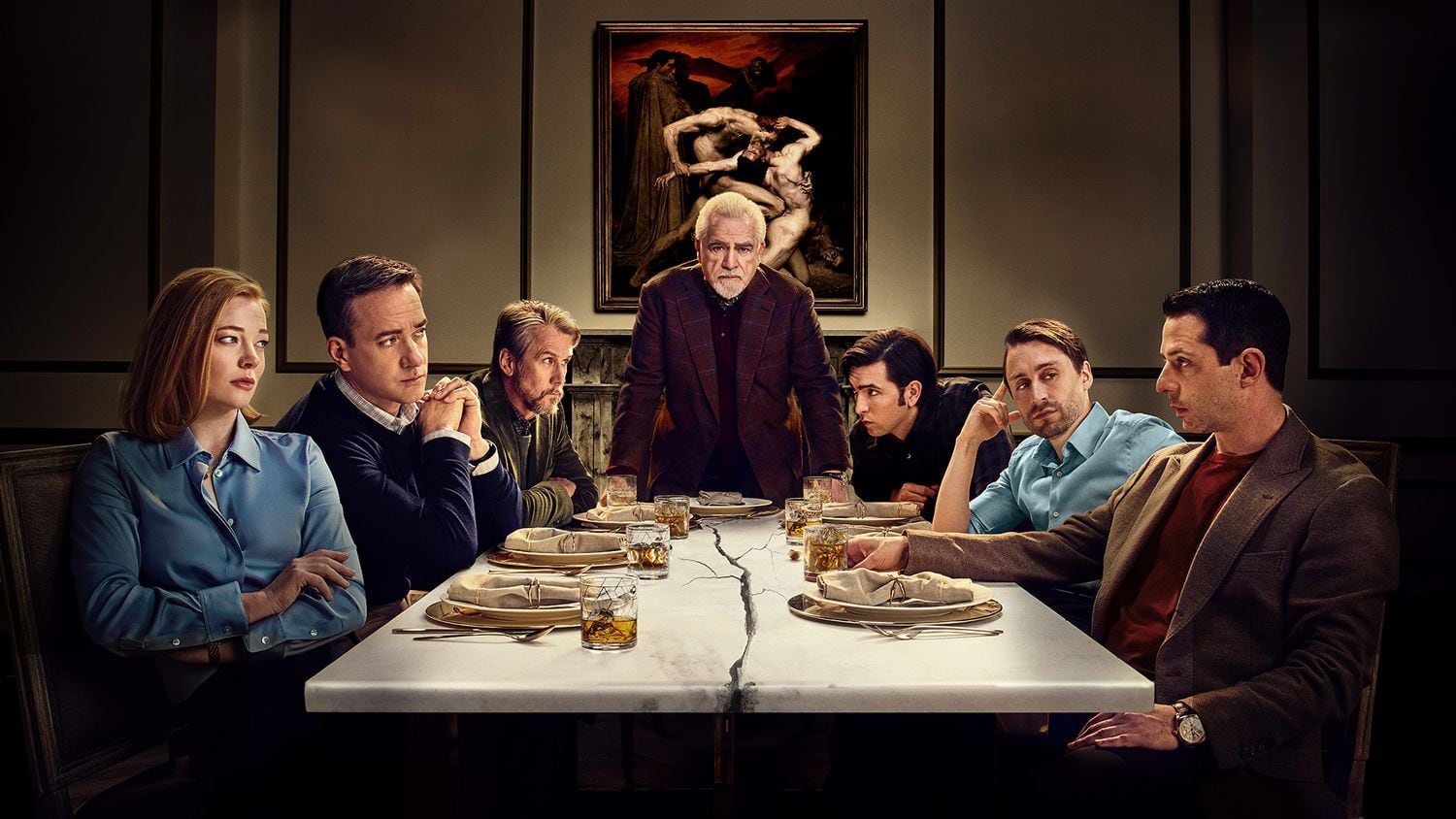
Succession. La serie de prestigio de los últimos años. Un reparto impecable interpreta a una de las familias más ricas del mundo, compuesta de potenciales herederos del imperio mediático del padre. No solo ofrece el placer incuestionable de maravillarse con y odiar a un grupo de deleznables milmillonarios; tiene además la inteligencia de no ser pesado. Las intrigas familiares van pasando a un segundo plano y cambian con la suficiente rapidez para no aburrirse nunca de mirar al reparto gritarse y traicionarse en distintas combinaciones. Está mejor escrita e interpretada que la mayoría de las ganadoras del Oscar de los últimos años. ¿Para ver del tirón? (binge watching) Se puede porque desde luego no cansa, pero se disfruta más si se va poco a poco. Dos temporadas de 10 capítulos de 40 minutos. HBO.
Euphoria. El drama de adolescentes que ha dejado antiguos a todos los dramas adolescentes. Más de ver que de entender, reúne los tópicos de siempre (amores malditos, drogas, sexo, chico popular con secretos, chantajes, adultos de los que no fiarte ni un pelo) y los retuerce (hay una chica trans en la pareja principal, las drogas se ven desde el punto de vista de una adicta en rehabilitación) mientras los envuelve en una estética onírica de brillantina y miradas tristes. ¿Para ver del tirón? Se recomienda espaciarla. Una temporada de ocho capítulos de 40 minutos. HBO.
Creedme. Uno de los dramas más reveladores de la era del Me Too cuenta la historia de una víctima de violación y sigue el tortuoso proceso al que la justicia somete a toda mujer violada. Repetir la historia una y otra vez, lidiar con escépticos, ver cómo le echan la culpa a ella… Basada en un reportaje de ProPublica (y por tanto en hechos dolorosamente reales), cuenta con una increíble Toni Colette que ganó el Globo de Oro. Fue una de las series del año de Barack Obama, junto con Fleabag y Watchmen. ¿Se puede ver del tirón? No. Una temporada de ocho capítulos de 40 minutos. Netflix.
Chernobyl. La claustrofóbica recreación del peor accidente nuclear de la historia, desde la boba luz roja que se enciende cuando algo empieza a ir mal en el núcleo del reactor de una central ucrania hasta las catastróficas mentiras con las que el Kremlin gestionó el desastre y puso en peligro incontables vidas. Es sobria, seca como un arenal, con momentos magistrales de tragedia. ¿Es lo mejor para una cuarentena provocada por una pandemia? No, en absoluto. Es la peor idea que se puede tener. Pero es la peor idea mejor hecha que hay en su televisor. ¿Se puede ver del tirón? No es imposible, pero no va a dormir hasta 2021. Una temporada de seis capítulos de una hora. HBO.
Watchmen. Tiene mucho para espantar al espectador medio. Se basa en un cómic de superhéroes nada menos, hubo una película no muy bien recibida sobre el mismo material, el reparto no es muy conocido… Y sin embargo, ha sido el título con mejores críticas del año. Será por cómo aprovecha las posibilidades de la ciencia ficción y la fantasía, y la idea de una raza de superhombres, para hablar de intolerancia, supremacismo y otros aspectos de la sociedad actual. ¿Se puede ver del tirón? No es especialmente rápida. Una temporada de nueve capítulos de una hora. HBO.
The Morning Show. Apple TV + se incorporó al universo de las plataformas con gran fanfarria y esta historia ambientada en la trastienda de un programa matinal de televisión como bandera de su apuesta. Este drama con un reparto de lujo (el regreso a la televisión de Jennifer Aniston, Reese Witherspoon y Steve Carell ha costado sus buenos millones de dólares a la compañía) arranca titubeante pero se logró posicionar como una de las sorpresas de la temporada con una trama que va más allá de la lucha de egos de las dos presentadoras del programa para abordar el mundo tras el Me Too de una forma más que interesante. ¿Se puede ver del tirón? Diez capítulos de una hora quizá sean demasiados, pero sí es bastante maratoneable, de hecho, posiblemente se disfrutará más. Apple TV +.
2. Para emocionarse
Kidding. Se habla poco de la vuelta del mejor Jim Carrey, en una de esas interpretaciones con las que te puede sacar una risa y al mismo tiempo romperte el corazón en mil pedazos. Carrey se mete en la piel de un presentador infantil cuyo único objetivo en la vida es hacer feliz a todos, incluso si lo hace refrenando sus impulsos más profundos. Un trauma que comienza en un trágico suceso: la muerte de su hijo en un accidente de tráfico. Esta serie con la particular firma de Michel Gondry contiene algunas de las secuencias más imaginativas jamás rodadas en televisión y una secundaria siempre a destacar: Catherine O’Hara como maestra titiritera. Kidding te ayudará a buscar la felicidad en cualquier detalle. ¿Se puede ver del tirón? A riesgo de explotar por sus locuras, sí. Dos temporadas, 10 episodios cada una, 30 minutos. Movistar series.
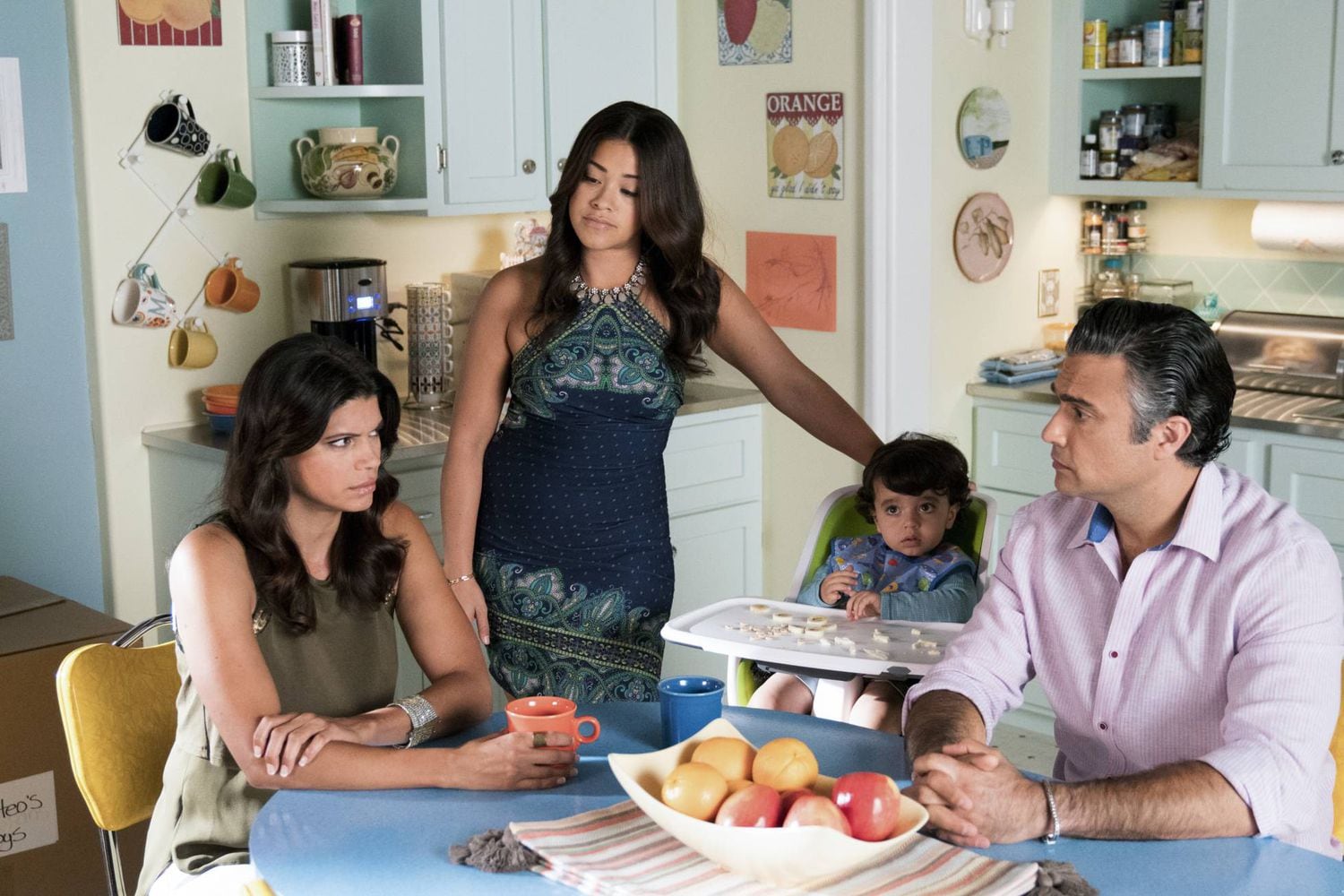
Jane the Virgin. Esto es, a la vez, una telenovela y una de las series mejor escritas de los últimos años. Cada capítulo está lleno de giros inesperados: muertes por sorpresa, amantes que resultan ser asesinos, amnesia, hermanos gemelos secretos que suplantan la identidad de otros… Y sin embargo, los personajes están tan inteligentemente diseñados, con los pies tan en el mundo real, que reaccionan a esos giros como personas no solo normales, sino hasta más sensatas de lo normal. Esa combinación hace que lo que podría ser infumable resulte entrañable, brillante y adictivo. Lo cual hace falta porque la premisa es fuerte: una chica católica, latina y pobre, que pretende llegar virgen al matrimonio, se queda dormida en la consulta de su ginecóloga, quien la insemina por error con la última muestra de semen de un rico heredero. ¿Se puede ver del tirón? Se debe. Cinco temporadas de 20 capítulos de una hora. Netflix (última temporada en Movistar +).
Día a día. Nadie puede estar triste si se pone a ver a esa bestia del espectáculo que es Rita Moreno, actriz todoterreno de 88 años que lleva triunfando desde West Side Story. Si ves Día a día, vas a llorar a mares, sí, pero será uno de esos llantos sanos, necesarios para el desahogo, en los que al final todo sale bien. Esta serie imperecedera trata con un estilo clásico grandes problemas del mundo actual desde la rutina de una familia latina en EE UU. Si las temporadas de Netflix no son suficientes, tras su cancelación en la plataforma la serie sigue rodándose (estos días sin público) por aclamación popular, ahora en otra cadena, Pop TV. Querrás quedarte encerrado con los Álvarez. ¿Se puede ver del tirón? Si te quieres deshidratar, sí. Tres temporadas, 10 episodios cada una, 30 minutos. Se puede ver con niños. Netflix.
Un lugar para soñar. Una serie para ver en familia. Es como si un telefilme de sobremesa de fin de semana se convirtiera en serie. Perfecta para sentirse bien y reconfortado durante un ratito con algo sin ninguna pretensión más allá de eso. Una mujer llega a un remoto pueblo canadiense huyendo de una vida complicada. Allí empezará a trabajar como enfermera junto al médico del pintoresco lugar. Por supuesto, desde el primer momento encontrará el apoyo del apuesto propietario del restaurante del lugar. Una dramedia blandita con cierto aire (salvando las grandes distancias) a Doctor en Alaska o Las chicas Gilmore por eso del pueblo con peculiares habitantes donde todos van a una cuando uno de ellos necesita ayuda. ¿Se puede ver del tirón? Sí, claro. Son 10 capítulos de 40 minutos y apta para todos los públicos. Netflix.
3. Para reír
El método Kominsky. Protagonizada por Michael Douglas, 75 años, y Alan Arkin, 85, aborda las aventuras y desventuras de esta dispar pareja mientras aprenden a envejecer. Entre la comedia y el drama, como la vida misma, esta divertida y tierna ficción es producto de Chuck Lorre, Dos hombres y medio y The Big Bang Theory. Si estas te gustaron, El método Kominsky, si bien tiene un tono y un estilo distintos, te encantará. ¿Se puede ver del tirón? Sin problema. Dos temporadas, ocho episodios cada una, 30 minutos. Netflix
Gentefied. Esta comedia logra meter al espectador en una premisa nunca usada (una familia de inmigrantes mexicanos en Los Ángeles intenta mantener su maltrecha taquería mientras el barrio se va gentrificando y llenando de modernos de moño y posgrado) y hace que resulte totalmente familiar en tan solo capítulo y medio. Es de esas series raras, sobresalientes, que entretiene mientras enseña rincones del mundo que no siempre reciben atención. ¿Se puede ver del tirón? Sí. Una temporada de ocho capítulos, 30 minutos. Se puede ver con niños. Netflix.
4. Para un atracón
You. Un librero se fija en una cliente. Tanto que puede entablar una conversación con ella sin asustarla y fijarse más en cómo le responde. De ahí consigue sus redes sociales, y continúa el estudio. Al poco, consigue forjar un disfraz de chico ideal, a la medida de aquella clienta. Algo que necesita, porque lo que ella no sabe pero nosotros sí es que su verdadera identidad es la de asesino. Con este punto de partida, y con un ritmo endiablado, esta serie, mucho más inteligente de lo que debería, ofrece una reflexión sobre el narcisismo, los prototipos de héroe masculino y, claro, las redes sociales. Consigue además mejorar en la siguiente temporada, donde directamente se convierte en una sátira de sí misma. ¿Se puede ver del tirón? Dios, sí. Dos temporadas de 10 capítulos de 40 minutos. Netflix.

Los protagonistas de 'Line of Duty'.
Line of Duty. Este policial británico es una de las series más adictivas que ha parido La BBC en los últimos tiempos. La historia se centra en el departamento antivicio de la Policía. Los policías que investigan a otros policías. Cada temporada gira en torno a la investigación de un posible policía corrupto. Los agentes Ted Hastings, Kate Fleming y Steve Arnott se encargan en cada temporada de hacer las pesquisas. A las grandes interpretaciones se suman unos guiones que son droga pura y que enlazan giro de guion tras giro de guion. La mejor opción para los amantes de las buenas series de investigaciones policiales. Difícil que te sientas defraudado. ¿Se puede ver del tirón? Se debe. Lo difícil es para hasta terminar una temporada. Ya van cinco emitidas de seis episodios de una hora (menos la primera que tiene cinco capítulos). Movistar + y Netflix.
The Witcher. Una de las narraciones más esquizofrénicas que se han visto en los últimos tiempos en la televisión. Pero una vez que se abandona el intento de entender el orden en el que ocurren los hechos (con diversas tramas que van saltando en el tiempo sin previo aviso), es muy difícil parar un maratón de esta adaptación de la saga de novelas que, a su vez, se adaptaron en un exitoso videojuego. Un inexpresivo Henry Cavill interpreta a Geralt de Rivia, un cazador de monstruos en un mundo lleno de bestias. Su destino estará entrelazado con el de una poderosa hechicera y una joven princesa. ¿Se puede ver del tirón? Por supuesto. De hecho, llega un punto en que, a pesar de no entender nada (ni si quiera por qué Henry Cavill no ha cambiado su gesto en toda la serie), no puedes dejar de verla. De momento, una temporada de ocho episodios de una hora. Netflix.
5. Joyas escondidas en los catálogos
John Adams. La biografía del segundo presidente de Estados Unidos (y padre del sexto) no es solo una lección de historia sobre la forja de la democracia más veterana del mundo, o un retrato de cómo la hoy primera potencia mundial ha vivido pegada a los mismos demonios desde el principio. Es también un entretenimiento de primer orden, con unos actores encantados de ponerse en la piel de George Washington durante la guerra de independencia y posterior presidencia, o Benjamin Franklin cuando era embajador en París. Enmarcada por la rivalidad, sucia e inagotable, entre Adams y su sucesor, Thomas Jefferson, cuenta desde los albores de la revolución de las 13 colonias hasta la muerte de los dos enemigos, el mismo día (4 de julio para más señas), cuando el país ya está encaminado hacia la dominación mundial. ¿Se puede ver del tirón? Con cuidado. Una temporada de ocho capítulos de una hora. HBO.
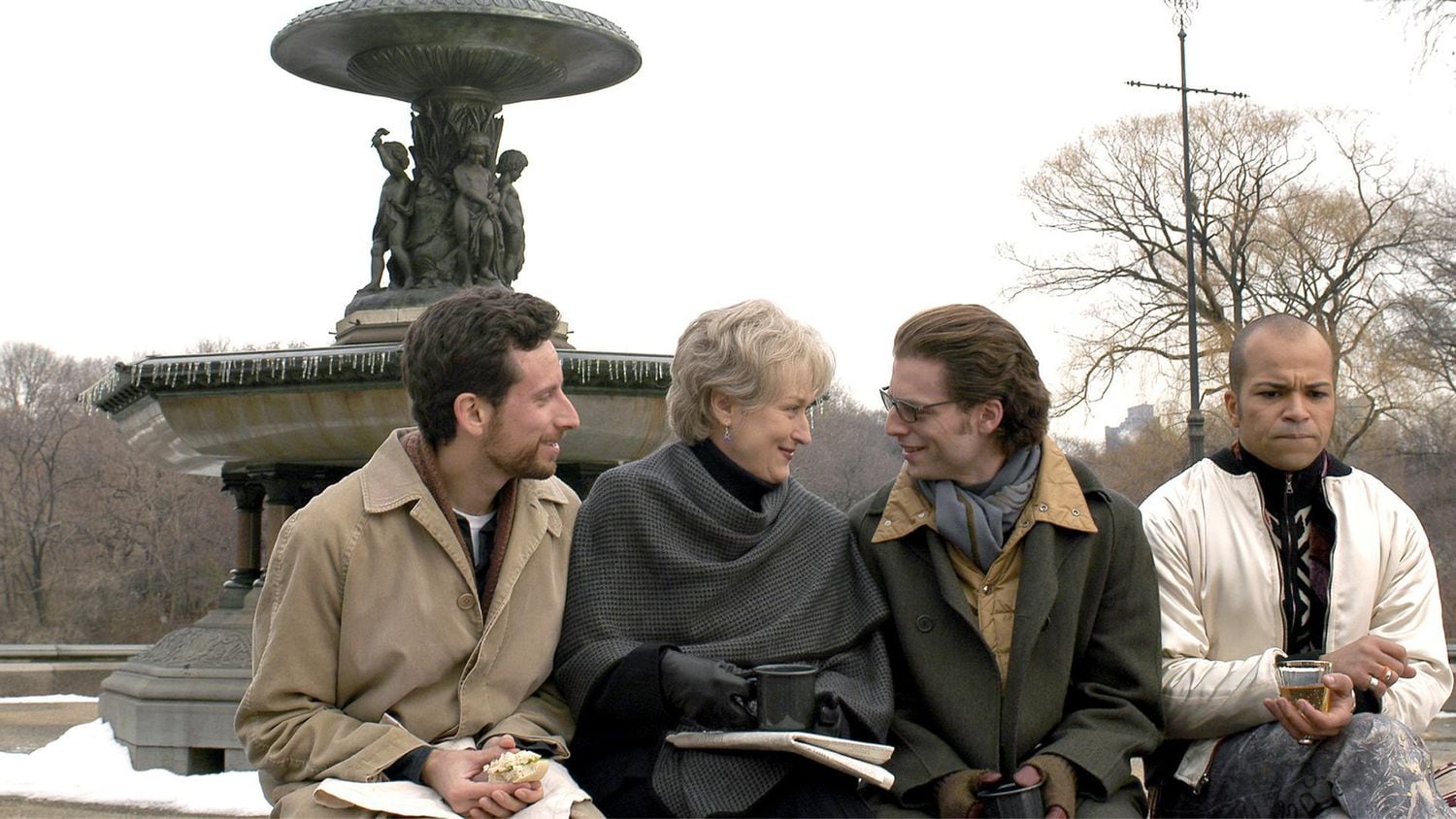
Ángeles en América. Una de las cimas de la dramaturgia estadoundiense fue el estreno de Ángeles en América, una función que duraba siete horas, sobre Nueva York en los ochenta, el sida, el imperio del neoconservadurismo, y qué es lo que lleva a que las muchas comunidades que conforman el país se entiendan entre ellas. La obra, de Tony Kushner, se consideró un clásico en el mismo momento de su estreno; lo mismo que su adaptación a serie, dirigida por el ojo clínico de Mike Nichols, donde estas ideas tan pesadas, y los parlamentos que las expresan, cayeron en manos de Meryl Streep, Al Pacino, Emma Thompson y demás. En su día (2003), The New York Times llamó a esta serie uno de los puntos álgidos del audiovisual mundial. Casi 20 años después sigue siéndolo. ¿Se puede ver del tirón? En teatro se hacía. El primer acto son los primeros tres capítulos. El segundo, los tres siguientes. Pero como todo lo bueno, mejor saborearlo. Seis capítulos de una hora. HBO.
De la Tierra a la luna. Vivimos días históricos, pero no fueron menos clave aquellos donde la llegada del hombre a la Luna era un sueño a punto de ser logrado. Tom Hanks (sin coronavirus a la vista) produjo y participó en esta miniserie, una de las primeras ficciones de HBO, que viaja mucho más allá del transportador del Apollo 11 y de aquel Apollo 13 dirigido por Hanks para colarse en 12 capítulos más desconocidos de las bambalinas de cada uno de los programas lunares. Una lección de historia muy entretenida con Cary Elwes, Sally Field, Rita Wilson, Chris Isaak o Bryan Cranston que cuenta al detalle aquella proeza, desde lo personal a lo global. Porque siempre nos debe quedar esperanza en el ser humano. ¿Se puede ver del tirón? Demasiada información para introducirla de una sentada. Una temporada de 12 episodios, una hora. Se puede ver con niños. HBO España.
Inside nº9. Una de las joyas ocultas de la televisión pública británica es esta antología de humor negro en los que cada capítulo cuenta una historia independiente con géneros y tonos muy diferentes entre sí y cuyo único nexo de unión (además de que en la gran mayoría aparezcan los dos creadores de la serie, Steve Pemberton y Reece Shearsmith) es que sus historias transcurren en algún espacio señalado con el número 9. Cada vez que empieza un episodio sabes que cualquier cosa puede ocurrir, desde reírte a llorar o pasar miedo, y normalmente hay un giro sorprendente en su final. Muy, muy recomendable. ¿Se puede ver del tirón? Se puede, y se puede parar cuando se quiera. Acaba de terminar su quinta temporada, con seis episodios de 25 minutos (y no te pierdas el episodio especial de Halloween, fuera de las temporadas normales). Filmin.
Freaks and Geeks. Si Élite es demasiado para ti, pero te gustaría volver al instituto, esta es tu serie. Nostalgia ochentera mezclada con drama adolescente. Una mirada sarcástica y realista a lo que era el instituto para todos esos que se sentían fuera de lugar. Vamos, para todos. James Franco, Seth Rogen, Jason Segel o Linda Cardellini comenzaron aquí a despuntar como estrellas gracias a su amigo Judd Apatow, y ya no los soltaría nunca. Todo al ritmo de Joan Jett. Lo malo es su cancelación tras una temporada. Aunque quizás por eso se mantiene como un diamante en bruto apto para todos los amantes de la nostalgia bien hecha. ¿Se puede ver del tirón? No hay razón para no hacerlo. Una temporada de 18 episodios, 44 minutos. Amazon Prime Video.
Wallace y Gromit. En la cuarentena hay que tener a los niños entretenidos con algo, y si con ese algo pueden disfrutar los padres, mejor. Décadas después de su estreno, los cuatro episodios de Wallace y Gromit siguen siendo de las obras “infantiles” más divertidas y surrealistas que se han creado nunca. Plastilina con la que siguió jugando el director Nick Park en el sello Aardmand en las encomiables Chicken Run y La oveja Shaun. En caso de desabastecimiento: siempre nos quedará la Luna para llenarnos de queso. ¿Se puede ver del tirón? Y también en bucle. Una temporada de cuatro episodios, de 30 minutos. Se puede ver con niños. Filmin. (Fuente: El País)
Wednesday, March 04, 2020

Saturday, February 22, 2020
The Cádiz Carnival in One Tweet
Y por suerte no son los únicos pic.twitter.com/aaqDQqSbPK— Siempre Atento🔻 (@SiempreAtento2) February 15, 2020
Wednesday, February 12, 2020
Fake Photography as Food for Thought
Alison Jackson's photography explores the cult of celebrity and how it's created through imagery and the media. An award-winning artist from the UK, Jackson's work has garnered both praise and condemnation. Many people are now taking notice, including President Donald Trump.
Subscribe to:
Posts (Atom)